There’s a moment in every mission where time runs out.
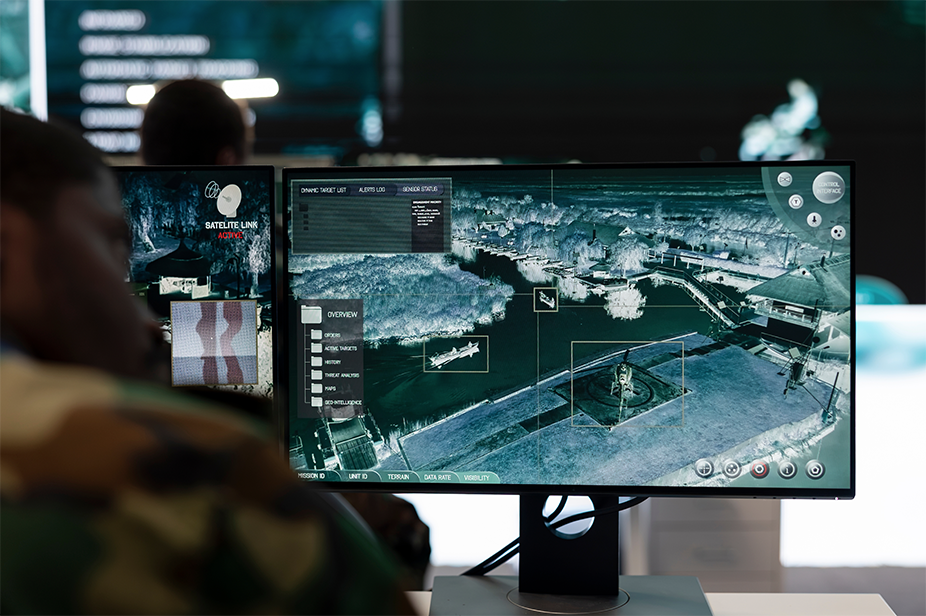
An unmanned ground vehicle is moving through contested terrain. Its sensors are pulling in multiple data streams. Something appears ahead.
Is it a threat?
How fast is it moving?
What action should be taken?
There’s no time to send data back to a remote system. No time to wait for analysis from another platform or cloud-based infrastructure.
The answer must happen right there on the platform, in real time.
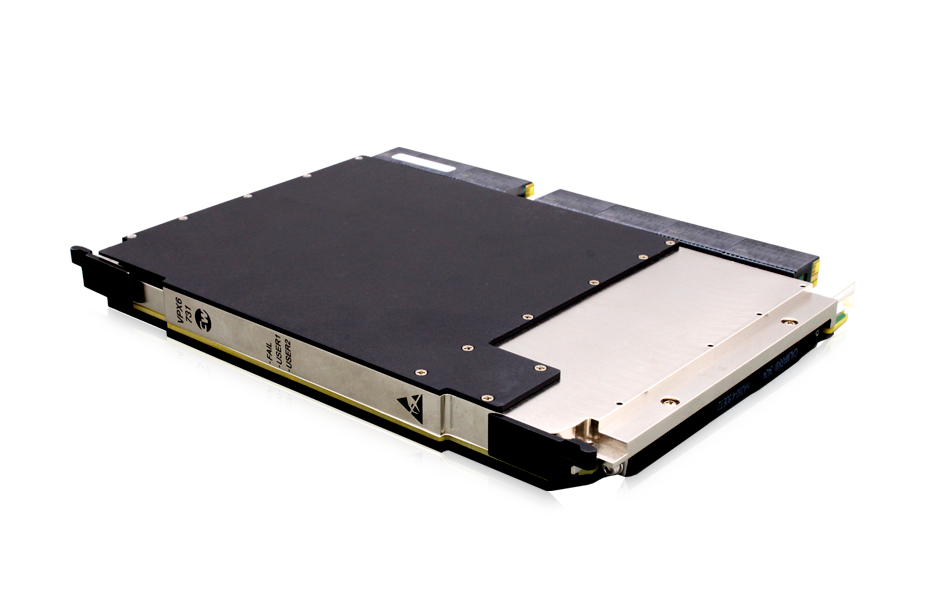
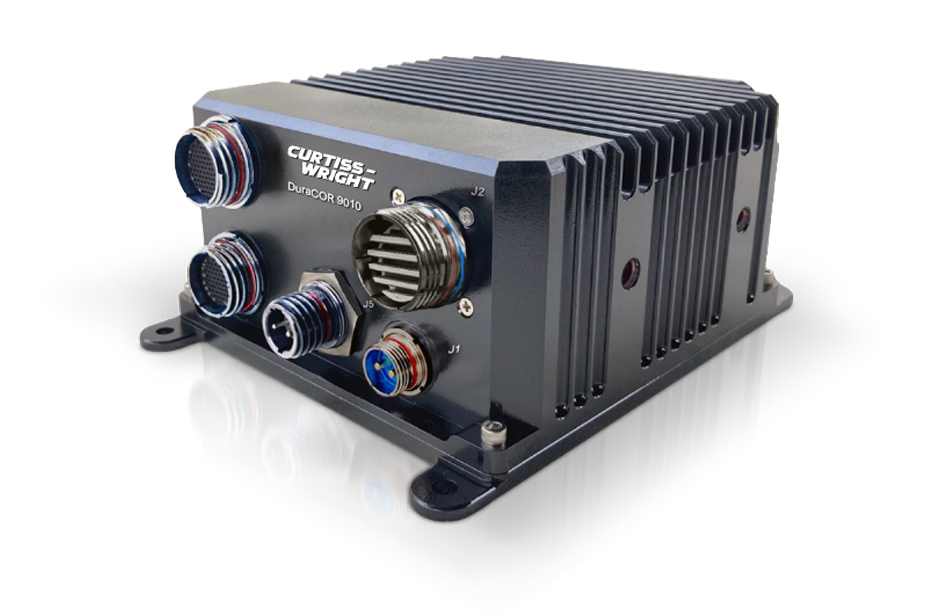
For years, that kind of capability forced painful trade-offs between performance, size, power, and integration complexity. The new Curtiss-Wright DuraCOR 9010, featuring NVIDIA® IGX Thor™ accelerated computing technology, changes the equation. Instead of relying on distributed computing architectures or remote processing, the DuraCOR 9010 brings massive capability directly to the tactical edge in a compact, ruggedized platform designed for aerospace and defense deployments.
The Problem: Too Much Data, Not Enough Time
Modern defense platforms are drowning in data.
Sensors are becoming more advanced every year. They capture higher-resolution imagery, wider RF spectrum, richer telemetry, and more environmental information across air, ground, and maritime domains. At the same time, AI models are becoming more sophisticated, and missions are demanding faster decisions.
That combination creates a fundamental challenge:
How do you process all that data quickly enough to act on it?
For years, system designers have had to make trade-offs:
- Send data off-platform and accept latency
- Limit the amount of data processed in real time
- Break systems into multiple compute nodes, increasing integration complexity
- Reduce AI model size to fit within power or thermal limits
- Depend on connectivity that may not exist in contested environments
None of those approaches work well in environments where:
- Connectivity is unreliable or unavailable
- Decisions must happen instantly
- Platforms are constrained by size, weight, and power
- Operators are already overwhelmed with information
In mission-critical situations, delays matter. Sending data elsewhere for processing introduces delays that can reduce situational awareness, slow response times, and ultimately compromise mission effectiveness.
The challenge is no longer theoretical. Modern missions are already demanding this level of capability in the field.
Why Is the Industry Moving Away from Reach-Back Architectures?
For years, many military systems relied heavily on “reach-back” architectures—sending large amounts of sensor data to centralized systems or remote operators for processing and analysis.
That approach worked when bandwidth was more available, data volumes were smaller, and systems were less autonomous.
But missions have changed.
Today’s platforms are expected to operate farther forward, with greater autonomy, in increasingly disconnected environments. Many systems must continue functioning even when communications are degraded, jammed, or unavailable entirely.
As a result, the industry is shifting toward a different model:
Bring intelligence directly to the edge.
That means:
- Processing data where it is generated
- Making decisions locally
- Reducing dependency on external infrastructure
- Delivering actionable insights in real time
This architectural shift is changing how defense platforms are designed.
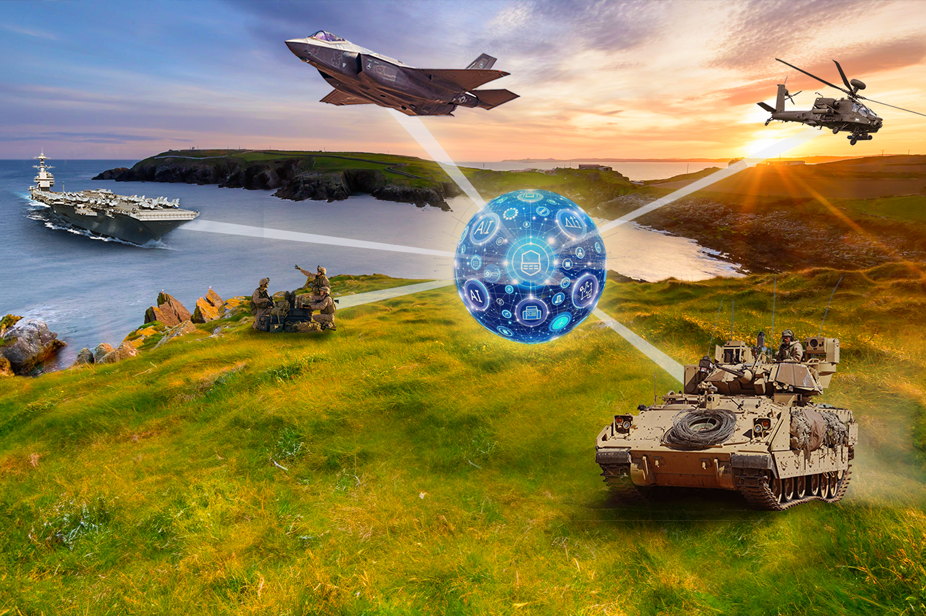
Instead of relying on fragmented processing infrastructures, engineers are increasingly looking for ways to consolidate sensing, acceleration, networking, and mission computing into a single deployable system.
That is exactly the type of challenge the DuraCOR 9010 was built to address.
What Makes Accelerated Edge Computing Different from Traditional Rugged Systems?
Traditional rugged computers were primarily designed around general-purpose CPU processing.
Modern AI and sensor-fusion workloads are different.
Applications such as autonomy, computer vision, electronic warfare, and multi-sensor fusion require massive amounts of parallel processing capability. They must ingest, analyze, and react to enormous streams of data in real time—often under strict SWaP and thermal constraints.
CPU-only architectures struggle to handle those workloads efficiently at the tactical edge.
Accelerated computing changes the equation.
By combining high-performance Arm® processing with Blackwell-class GPU acceleration and large pools of unified memory, platforms such as the DuraCOR 9010 can process significantly larger AI and sensor workloads locally without relying on external infrastructure.
This enables capabilities such as:
- Real-time sensor fusion
- AI-assisted target detection and classification
- Autonomous navigation and obstacle avoidance
- RF signal analysis and spectrum monitoring
- Low-latency decision support
- Advanced computer vision and inference
More importantly, it allows these functions to happen directly on the platform where the data is generated.
The result is faster decision-making, lower latency, and reduced dependence on connectivity.
What Becomes Possible When Processing Happens Directly at the Edge?
This is where the operational impact becomes significant.
With platforms such as the DuraCOR 9010, system designers can move away from fragmented compute infrastructures and toward compact, integrated edge architectures capable of operating directly within the mission environment.
Instead of relying on multiple disconnected subsystems, operators can deploy a single rugged compute platform that:
- Ingests data from multiple sensors
- Processes information in real time
- Runs advanced AI models locally
- Delivers actionable insights immediately
That changes what becomes operationally possible.
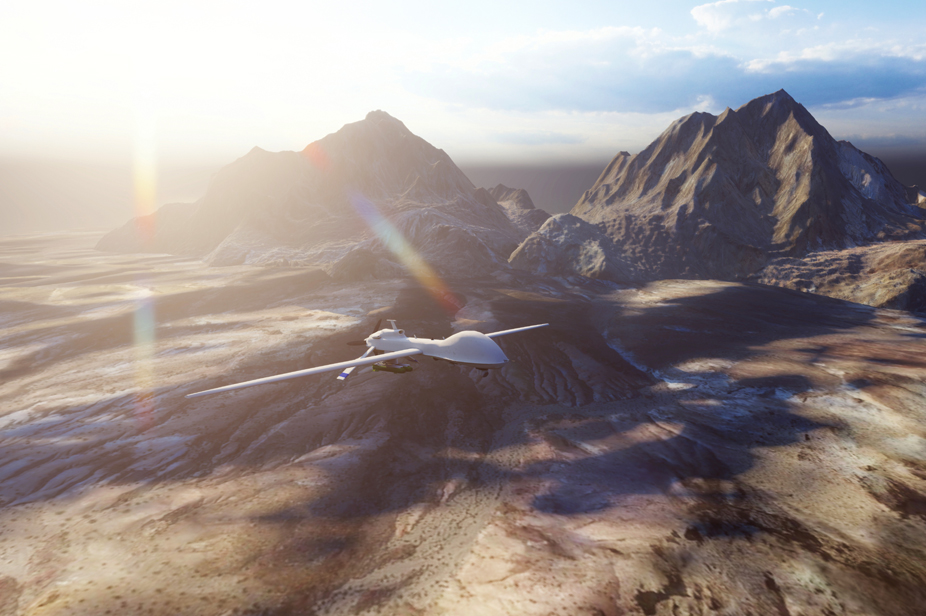
- An unmanned system no longer needs to wait for instructions from a remote operator before responding to changing conditions.
- A pilot no longer needs to manually interpret overwhelming streams of raw sensor data.
- A mission operator no longer needs to manage multiple disconnected processing systems.
Instead, the platform can consolidate sensing, acceleration, and mission processing into a unified edge architecture that supports faster, more informed decisions.
Powered by accelerated computing technology, the DuraCOR 9010 enables advanced processing directly at the tactical edge without depending on external compute infrastructure.
Everything happens on the platform.
Key Technical Highlights
The DuraCOR 9010 combines advanced accelerated computing technology with a ruggedized architecture designed for aerospace and defense deployments.
Key capabilities include:
- NVIDIA IGX Thor accelerated computing architecture
- Blackwell-class GPU acceleration
- High-performance Arm Neoverse™ CPU processing
- Up to 128 GB LPDDR5 unified memory
- Extensive sensor and networking connectivity
- Modular Application Personality Modules (APMs)
- Rugged MIL-qualified environmental design
- Flexible high-capacity storage options
- Designed for SWaP-constrained edge deployments
These capabilities matter not simply because of the specifications themselves, but because they allow system designers to consolidate AI acceleration, sensor fusion, networking, and mission computing into a single deployable platform.
Where Could This Type of Edge Capability Be Used?
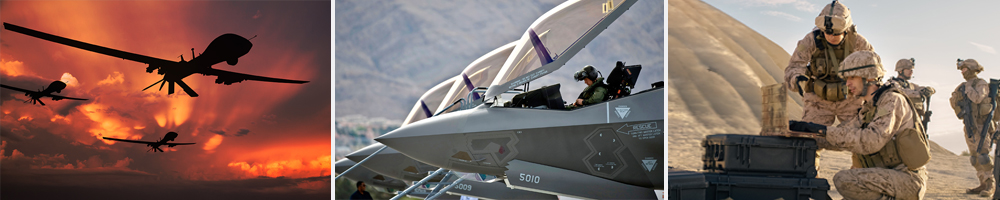
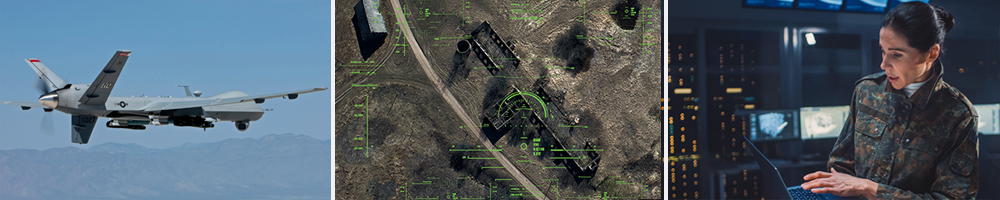
While designed for the rugged aerosapce and defense environments, the small form factor (SFF) DuraCOR 9010 is applicable anywhere real-time processing and sensor fusion must deliver immediate decisions under extreme operating conditions. This includes:
Autonomous and Unmanned Systems
Modern unmanned platforms must process navigation, targeting, obstacle avoidance, and sensor-fusion workloads locally—often without reliable connectivity.
The DuraCOR 9010 enables these platforms to analyze changing conditions in real time while operating in GPS-denied or communications-denied environments.
ISR and Multi-Sensor Fusion
ISR missions increasingly depend on the ability to ingest and process EO/IR, radar, LiDAR, and RF sensor streams simultaneously.
The DuraCOR 9010 supports rapid target detection, tracking, classification, and situational awareness directly at the edge.
Electronic Warfare and Spectrum Monitoring
Electronic warfare applications require high-speed signal processing and low-latency analysis of massive RF datasets.
Accelerated computing architectures enable faster classification, detection, and response in contested spectrum environments.
Command and Control (C2) Systems
Modern C2 systems must fuse battlefield data from multiple sources while delivering timely operational insights to commanders and operators.
Compact edge compute platforms can help reduce latency while improving responsiveness in mobile and deployed environments.
Why Is This Becoming Mission-Critical Right Now?
Several major trends are converging simultaneously across the defense industry:
- AI models are growing larger and more complex
- Sensors are generating exponentially more data
- Platforms are becoming more autonomous
- Operators expect faster insights
- Connectivity is becoming less reliable in contested environments
- SWaP constraints continue tightening
That combination is accelerating demand for rugged edge processing platforms capable of delivering high-performance compute directly where the mission happens.
The industry is no longer asking whether edge AI acceleration will become necessary.
The transition is already underway.
The Bottom Line: From Data to Action—Instantly
At its core, this is about solving a fundamental challenge:
How do you turn overwhelming amounts of data into immediate, actionable decisions exactly where they matter most?
The answer is to bring powerful, integrated compute directly to the tactical edge.
The DuraCOR 9010 helps eliminate delays caused by data backhaul and fragmented processing infrastructures. It delivers the low-latency accelerated computing capability needed to transform raw sensor data into operational insight in real time.
As defense systems continue evolving toward greater autonomy, sensor fusion, and distributed operations, edge computing architectures will become increasingly central to mission success.
Key Takeaways
- Modern defense missions require real-time processing directly at the edge
- Traditional reach-back architectures introduce latency and operational dependency
- Accelerated computing enables advanced AI and sensor fusion in SWaP-constrained environments
- Consolidated rugged architectures can reduce integration complexity and deployment risk
- The DuraCOR 9010 delivers advanced edge processing capability in a compact deployable platform
- The shift toward on-platform intelligence is already reshaping defense system architectures
Learn More
Explore the new DuraCOR 9010
Download the DuraCOR 9010 datasheet
Connect with a Curtiss-Wright expert to discuss your application requirements
Frequently Asked Questions:
- How does the DuraCOR 9010 compare to previous DuraCOR models?
The DuraCOR 9010 represents a significant leap forward in accelerated edge computing capability, combining NVIDIA IGX Thor architecture, Blackwell-class GPU acceleration, high-speed unified memory, and expanded sensor connectivity in a compact ruggedized platform. - Why does on-platform processing matter in disconnected environments?
In many tactical environments, connectivity may be degraded, contested, or unavailable entirely. Processing data locally reduces dependency on external infrastructure while enabling faster operational decisions. - What are Application Personality Modules (APMs)?
APMs are Curtiss-Wright modular expansion cards that allow rapid I/O customization without requiring extensive redesign. Options include avionics interfaces, video capture, Ethernet/TSN connectivity, and additional mission-specific functionality. - Is the DuraCOR 9010 fully rugged and MIL-qualified?
Yes. The platform is designed for demanding aerospace and defense environments and supports MIL-standard environmental, EMI/EMC, and power requirements. - How much storage does it support?
The platform supports multiple high-capacity storage configurations, including internal NVMe and removable storage options designed for mission flexibility and rapid declassification workflows. - What kind of accelerated computing performance can I expect?
The NVIDIA IGX Thor architecture combines high-performance Arm processing, Blackwell GPU acceleration, Tensor Cores, and unified memory to support demanding AI, sensor fusion, inference, and autonomy workloads directly at the edge.

Subscribe Today!
To our blog and receive a monthly email that keeps you up-to-date with the latest news and insights from Curtiss-Wright.

Thomas King
Product Manager for GPU and Edge Compute Solutions
Thomas King is a Product Manager at Curtiss-Wright Defense Solutions, managing the GPU compute and graphics product line. Thomas has a degree in Aerospace Engineering from Carleton University with a specification in Space Systems Design. With a background in technical sales and applications engineering, he has experience supporting customer integration of embedded electronics. Thomas is interested in new and innovative solutions regarding sensor, AI, RF, and compute technology.