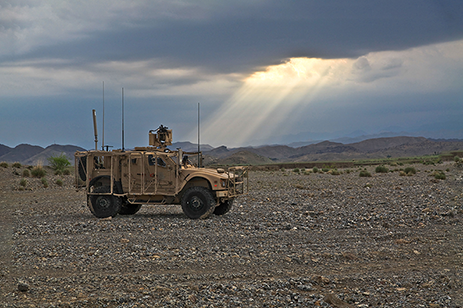
Next Generation Command and Control (NG2C) is the U.S. Army's effort to modernize how information is collected, shared, and acted upon across the battlefield.
As military operations become increasingly distributed, commanders require access to information from a growing range of sensors, platforms, applications, and autonomous systems. NGC2 seeks to improve how these systems work together, enabling faster decision-making and greater operational flexibility across contested environments.
Built around open architectures, interoperability, and scalable infrastructure, NGC2 represents a significant evolution in how command and control capabilities are developed, integrated, and deployed.
What is NGC2?
NGC2 is designed to create a more connected and adaptable command and control architecture across the Army.
The initiative is built around four foundational layers:
- Transport
- Infrastructure
- Data
- Applications
Together, these layers create a framework that allows information to move more effectively between sensors, communications systems, mission applications, and decision-makers. NGC2 supports a broad ecosystem that includes:
- Tactical communications networks
- Sensors and ISR platforms
- Autonomous systems
- Mission command
- Cloud and edge computing
- Coalition and joint forces

The Goal
Deliver the right information to the right person at the right time, even in contested or denied environments.
How NGC2 Works

NGC2 Demands More from Tactical Infrastructure
Modern command and control systems are only as effective as the network and compute infrastructure supporting them.
Contested Communications
Networks must operate effectively in denied, disrupted, intermittent, and limited (DDIL) environments while supporting dispersed and highly mobile forces.
Data Processing at the Edge
Information from sensors, ISR platforms, and mission systems continues to grow. Processing data closer to collection reduces latency and improves decision-making.
Mobility and Network-on-the-Move
Command and control capabilities must move with the force, maintaining connectivity across vehicles, command posts, and expeditionary environments.
Rapid Technology Integration
Open architectures enable the integration of new radios, applications, sensors, and computing technologies without requiring complete system redesigns.
Size, Weight, and Power Constraints
Tactical platforms require rugged solutions that balance performance with size, weight, power, and cooling constraints.
Infrastructure Matters
The transport and infrastructure layers of NGC2 provide the foundation that enables data and applications to function effectively across the tactical environment.
Networking, communications, compute, cybersecurity, and management capabilities must work together to support distributed operations while maintaining resiliency, mobility, and interoperability.
As NGC2 continues to evolve, the ability to rapidly deploy, manage, and scale tactical infrastructure will remain a critical component of successful command and control architectures.
Supporting Tactical Networks Today
Curtiss-Wright has supported tactical communications and command-and-control programs for more than two decades.
Our PacStar product portfolio has been deployed across U.S. military and coalition operations worldwide, providing modular networking, communications, and edge compute capabilities for mobile and expeditionary environments. Today, many of the operational priorities driving NGC2 - including mobility, interoperability, edge processing, open architectures, and network-on-the-move capabilities - align closely with the requirements that have shaped the evolution of the PacStar portfolio.

Operational Experience
PacStar solutions are fielded across defense organizations in more than 30 nations and support a wide range of tactical communications and mission networking applications.

U.S. Production Scale
Designed and assembled in the United States, PacStar solutions are produced at scale and support the deployment, sustainment, and modernization requirements of defense customers worldwide.

Continued Investment
Curtiss-Wright continues to invest in networking, communications, edge compute, cybersecurity, and management technologies that support the evolving requirements of modern command and control environments.
Looking Ahead
NGC2 is designed to create a more connected and adaptable command and control architecture across the Army.
As new technologies emerge and operational requirements continue to evolve, success will depend on architectures that support interoperability, scalability, mobility, and rapid technology insertion.
Curtiss-Wright remains committed to supporting these objectives through continued investment in the communications and infrastructure technologies that enable modern tactical operations.