
In the modern theater of operations, the network isn't just a collection of servers in a climate-controlled room. It’s a tactical data link (TDL) on a stealth fighter over the Pacific, a command-and-control room on a destroyer in the Mediterranean, or a sensor array sitting on a sun-scorched desert ridge.
For defense contractors and military teams, managing these distributed systems presents a logistical paradox: How do you maintain ironclad security and rigorous compliance when your hardware is scattered across the globe, often in the harshest of environments?
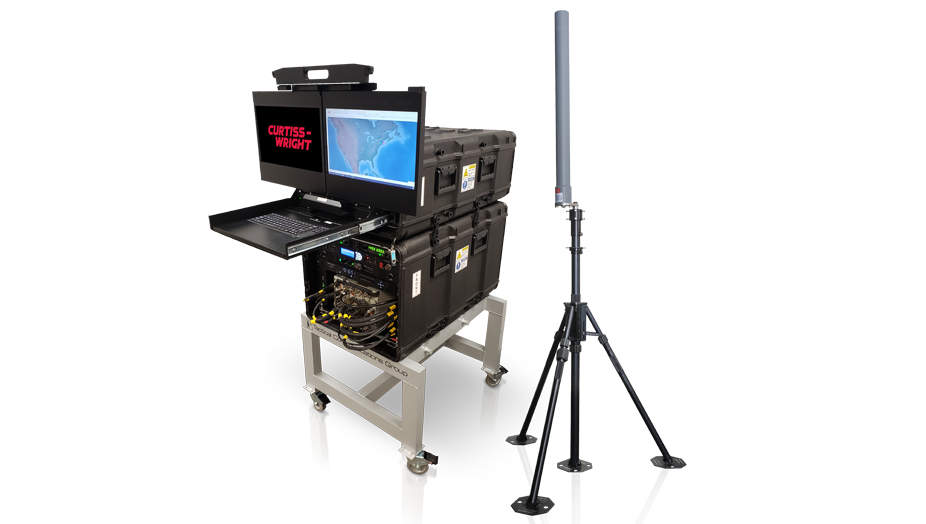
The answer lies in moving away from reactive maintenance and toward a philosophy of Continuous Monitoring. Enter the TCG GTS Continuous Monitoring System (GTS CMS), a powerhouse tool designed by Curtiss-Wright that bridges the gap between high-level IT management and frontline defense requirements.
The Logistical Nightmare of Manual Maintenance
Traditionally, maintaining distributed systems was a "boots on the ground" effort. When a system required a security patch, a Defense Information Security Agency (DISA) Security Technical Implementation Guide (STIG) update, or a hardware health check, it meant deploying field service teams.
Consider an example of the lead of a field service team tasked with overseeing fifty separate installations. Without a centralized, continuous monitoring solution, their reality looks like this:
- Massive travel costs: flights, per diems, and specialized transport to remote sites.
- Time lag: By the time a technician reaches a remote site, the security patch they are carrying might already be outdated.
- Inconsistency: When systems are updated manually at different times, the network loses its cohesive state, often creating vulnerabilities.
The GTS Continuous Monitoring System literally changes the math. What used to take months of travel and logistical planning can now be assessed and managed within a single hour.
More Than Just an RMM: A Defense-First Approach
In the commercial world, Remote Monitoring and Management (RMM) tools are common. They help IT shops manage office laptops and cloud servers. However, the TCG GTS Continuous Monitoring System isn't a standard commercial tool; it is a defense-specific solution designed for the unique rigors of the military sector.
While it handles general IT management, its primary mission is continuous security defense. It is specifically engineered to handle:
- Cybersecurity & threat mitigation: it doesn't just watch; it identifies and helps respond to active threats in real-time.
- DISA STIG compliance: For military customers, STIG compliance isn't optional; it’s mandated. GTS CMS automates the oversight of these security overlays, ensuring that every node in the network remains compliant without manual intervention.
- Failover and redundancy: In mission-critical environments, a system failure isn't just an inconvenience; it may put the entire mission at risk. The GTS CMS monitors for disaster recovery and redundancy to ensure continuous uptime.
- Specialized updates: Unlike commercial tools that might struggle with tactical software, this system handles both operating system updates and Curtiss-Wright-specific software patches with ease.
The Curtiss-Wright Advantage is Integration and Specialization
There are other players in the network monitoring space, but the military market demands a level of specialization that commercial competitors cannot reach.
Many vendors offer parts of the puzzle. Some focus on firewall management, others on virus protection. Curtiss-Wright’s GTS CMS is an all-in-one solution. It incorporates standard IT needs, such as virus management and firewall monitoring, and then layers on the critical components specific to defense.
The difference-maker is that the GTS Continuous Monitoring System provides a significant value-add for users of other TCG GTS software. While it works across a variety of platforms, its integration with TCG technology ensures precise compliance with cybersecurity requirements.
When Do You Need a Continuous Monitoring System?
If you are managing five systems in a single building, a continuous monitoring manager might be overkill. But the moment your footprint expands, the GTS CMS system becomes essential.
You need GTS CMS if your systems are:
- Geographically distributed: Located across aircraft, ships, and remote installations.
- Hard to access: Situated in remote desert, mountain, or sea environments where on-site visits are difficult to do and are a last resort.
- High-stakes: Where a single unpatched vulnerability could compromise a multi-million-dollar asset or the lives of warfighters during a critical mission.
A User’s Perspective
Back to our example of the field service team leader. Your primary goal is consistency. You want to know that the system on the ship in the Atlantic is running the exact same security profile as the system in the training facility in Nevada.
Using GTS CMS, you no longer have to wonder. From your central dashboard, you can monitor for:
- Security patches: deploying them across the network simultaneously
- Cyberattacks: receiving instant alerts the moment a node is probed
- Disaster recovery: ensuring backups are running and failovers are ready
This doesn't just save money; it provides peace of mind. Your systems remain cohesive, your team is not traveling, and your network is always up to date on DISA STIGs.
Security at the Speed of Flight
In a world where threats evolve in milliseconds, waiting months for a field team to update a remote site is no longer a viable strategy. The GTS Continuous Monitoring System provides the extensive visibility required to protect distributed networks. It turns the burden of maintenance into a streamlined process ensuring that whether your system is on a mountain or in a cockpit, it is defended, compliant, and ready at any time.
Learn more about the TCG GTS Continuous Monitoring Manager.

Subscribe Today!
Subscribe to our blog and receive a monthly email that keeps you up-to-date with the latest news and insights from Curtiss-Wright.

Steven Horsburgh, Ph.D.
Director of Product Management
Dr. Horsburgh is the Director of Product Management at the Tactical Communications Group of Curtiss-Wright Defense Solutions. After obtaining his Ph.D. in Physics, he has 36 years of research and development experience designing solutions to complex, large, data driven applications for commercial and military use. He has 18 years of experience with Tactical Data Links software design and development in both engineering and management positions. Prior to joining Curtiss-Wright, Steve worked in satellite communications and data management for the Naval Research Lab, Mission Research Corporation, and ATK and subsequently joined Tactical Communication Group, LLC (TCG) to architect, design and manage agile research and innovation projects related to Tactical Data Links including Link 16, Link 22, Link 11, JREAP, VMF, CoT, and CESMO.


