
Cloud computing has transformed the way organizations operate, enabling teams to scale rapidly, deploy services instantly, and analyze data in powerful new ways. Yet, for mission-focused users—especially those deployed forward—there has always been a boundary. Cloud performance traditionally relies on strong, stable network connectivity.
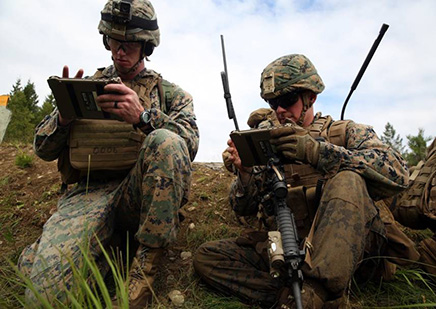
In the field, connectivity is often anything but stable.
This is a longstanding challenge: how to bring cloud capabilities to environments where the network cannot be relied upon. Curtiss-Wright and Microsoft are closing that gap. Curtiss-Wright PacStar® tactical edge servers are now validated to run Microsoft Azure Local, enabling secure, hybrid cloud workloads to operate in the very locations where traditional cloud services struggle.
This isn’t about moving storage closer to the field. It’s about running enterprise-grade cloud software in places that were once considered unreachable.
Why This Matters
Recently, the U.S. Secretary of War Pete Hegseth announced sweeping acquisition reform measures aimed at accelerating the adoption of commercial technologies across the Department of War. The message was direct:
“We cannot allow outdated procurement systems or legacy architectures to slow the delivery of innovation to operational forces.”
The announcement follows the Pentagon’s newly released framework, Transforming the Defense Acquisition System into the Warfighting Acquisition System, which emphasizes accelerating the fielding of “urgently needed capabilities to our warriors.” It reinforces the Department’s shift toward faster, more flexible acquisition practices - and its demand for commercially proven solutions that can move at the speed of innovation.
That’s precisely the space where Curtiss-Wright and Microsoft are operating - bridging the gap between enterprise innovation and operational deployment.
Cloud-native software, containerized workloads, and AI-enabled decision tools are now standard in commercial environments. The U.S. and its allies need to access these same capabilities - without being limited by data center proximity or terrestrial network conditions.
Hybrid cloud capability at the edge is a tangible answer to that direction.
Hybrid Cloud That Operates When Networks Don’t
Running Azure Local on Curtiss-Wright hardware allows deployed units to run mission applications, data services, and analytics tools autonomously - even when reach-back communication is unavailable or disrupted.
For operators, this means:
- Applications remain accessible, even under denied, disrupted, intermittent, and limited-bandwidth (DDIL) environments.
- Data can be processed and acted upon locally, instead of waiting for a round trip to the cloud.
- AI models can fuse and interpret sensor data in real time at the edge.
- Units maintain operational momentum without depending on network availability.
This is resiliency by design - not by exception.
Designed for the Realities of Expeditionary Operations
PacStar Modular Data Center systems offer the compute, storage, and networking capabilities of an enterprise server environment, but in a rugged, modular, and small-form-factor configuration built for field deployment. Unlike commercial servers repackaged for the edge, Curtiss-Wright's PacStar systems are engineered and proven (TRL 9) for these environments, designed, tested, and qualified to withstand shock, vibration, temperature extremes, and dust.
This enables:
- Deployment in command posts, maritime platforms, and mobile vehicles
- Rapid reconfiguration based on mission need
- Coalition and joint task force interoperability
- Secure, private cloud environments anywhere operations demand
When Azure Local runs on this infrastructure, it delivers the same interfaces, workflows, and application architectures familiar to enterprise users - without requiring the physical presence of a fixed data center.
The cloud becomes portable.
Aligning to DoD Modernization Priorities
The DoD has been clear: modernization must accelerate, and commercial innovation must move forward without years of lag. This collaboration aligns directly with that direction:
- Commercial cloud-native tools → made deployable in contested environments
- Rugged expeditionary hardware → made interoperable with enterprise architectures
- Mission data and workflows → available where they are needed, not only where networks are strong
It shortens the distance between Silicon Valley and the tactical edge.
A Better Foundation for Decision Superiority
Operational advantage increasingly depends on the ability to:
- Understand the battlespace faster
- Share information securely and selectively
- Coordinate actions across multiple domains
Hybrid cloud at the edge strengthens each of these capabilities - and does so in a way that scales, evolves, and improves over time.
This is not a demonstration or a prototype.
It is a deployable approach designed for real-world operations.
Learn More

Subscribe Today!
Subscribe to our blog and receive a monthly email that keeps you up-to-date with the latest news and insights from Curtiss-Wright.

Dominic Perez
Chief Technical Officer
Dominic Perez joined Curtiss-Wright in 2008 as part of the company’s Quality Department. He took an active role in product development and was part of the team that created the first small form factor (SFF) PacStar 1200-Series modules which evolved into the industry-leading PacStar 400-Series product line. In 2013, he led the Quality Systems and Networking Engineering departments, which among other responsibilities created the PacStar Secure Wireless Command Post (SWCP). He was promoted to Vice President of Systems Engineering in 2020 and tasked to lead the development of the company’s next generation of integrated solutions. In 2021, he was promoted to Chief Technical Officer and appointed a Technical Fellow at Curtiss-Wright.
