What is Golden Dome for America?
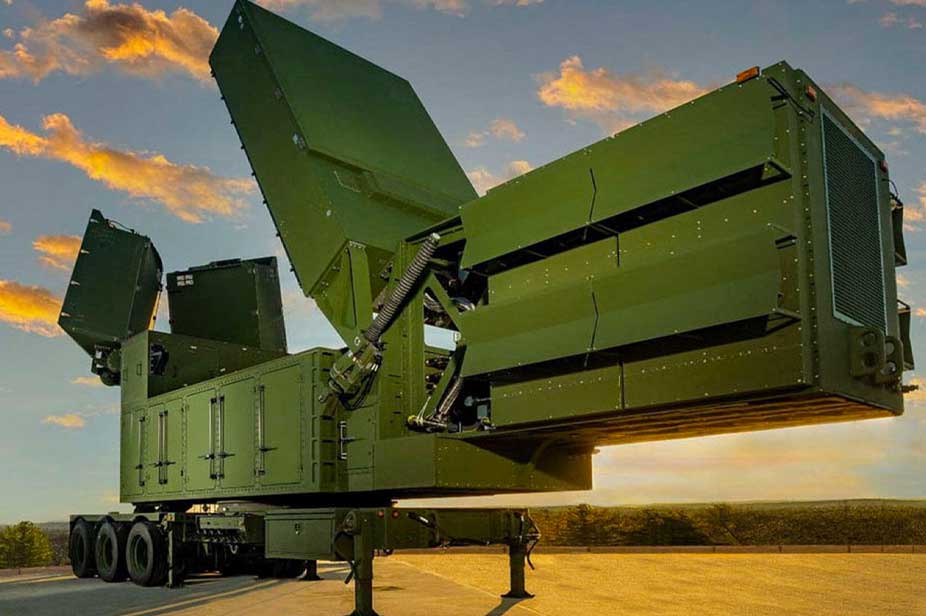
Golden Dome for America is a proposed initiative that will provide a multi-layered approach to detecting, tracking, and defending against aerial threats, including ballistic, cruise, and hypersonic missiles. To accomplish this, expanded and enhanced U.S. defense capabilities will require integrated computing and networking architectures to power next-generation radar and defense systems.
Why Modern Radar Systems Require Advanced Computing
Every radar track, data link, and command decision begins with one thing: compute power you can trust.
As radar and sensor networks evolve, modern radars must support:
- Higher frequency tracking
- Adaptive beamforming (dynamically steering the radar in real time)
- Multi-mission data fusion
- Artificial intelligence (AI) signal processing
Meeting that demand requires a new generation of rugged, high-bandwidth processing that’s purpose-built for the modern defense ecosystem.
Why it Matters: Electronic Protection and Resilience in Contested Spectrum
Modern adversaries don’t just hide; they also interfere. In contested airspace, where adversaries actively jam radar signals, electronic attacks and spoofing have made the electromagnetic spectrum a battlespace of its own.
Adaptive radars must:
- Detect jamming attempts
- Dynamically re-tune frequencies
- Regenerate waveforms in real time
This requires massive on-board processing and high-speed data sharing among array elements. Curtiss-Wright’s edge-compute architectures enable OEMs to integrate electronic-counter-countermeasure (ECCM) capabilities directly into their radar cores — turning resilience into a design feature, not an afterthought.
Networked, Distributed, and Modular Defense Architectures
Defense systems must operate across interconnected land, sea, air, and space networks. Open, modular architectures built on MOSA principles enable interoperability and let OEMs upgrade hardware without re-certifying entire systems.
Curtiss-Wright’s 100 GbE and 400 GbE fabric backplanes, paired with scalable compute modules, networking, and storage technologies, form the backbone of these distributed networks, providing:
AI-Enabled Signal Processing:
- Powered by the latest technology, including NVIDIA® Blackwell GPUs
- Accelerated detection, classification, and tracking
- Enables better situational awareness for real-time decision making
High-Speed Networking and Data Processing
- Supports low-latency, high-throughput data sharing
- Enables distributed sensor fusion across platforms
- Seamless growth across generations of radar platforms

Did You Know?
Curtiss-Wright’s VPX3-730 features the NVIDIA RTX PRO™ 5000 Blackwell GPU, is SOSA-aligned, and delivers 15 times the performance of other accelerated computers, making it ideal for radar and sensor fusion applications that need deep learning inferences and powerful math engines for AI workloads.
A Digital Foundation for Future Defense Systems
Next-generation radar and defense systems demand both adaptability and trust.
Curtiss-Wright delivers essential components for the Golden Dome for America initiative with:
- Real-time AI processing
- Resilient operation in contested environments
- Scalable, modular system designs
That’s the promise of Golden Dome for America: a digital foundation engineered for resilience, speed, and the defense of the nation.
Learn more about how Curtiss-Wright is supporting Golden Dome for America here.
FAQs
- What is Golden Dome for America:
Golden Dome for America in a proposed multi-layered missile defense system for the United States. Learn more here. - Why is edge computing more important for modern radar systems?
AI improves radar performance by enabling faster detection, classification, and tracking of threats. It also supports adaptive responses by identifying jamming attempts and optimizing signal processing in real time. - What are electronic counter-countermeasures (ECCM)?
Electronic counter-countermeasures are techniques used to maintain performance during jamming and spoofing attacks on radar systems. - What is MOSA and why is it important?
The Modular Open Systems Approach (MOSA) is a design strategy that enables interoperability, scalability, and easier upgrades of defense systems. It allows the integration of new technologies without a complete redesign of the entire system, helping reduce costs.

Subscribe Today!
Subscribe to our blog and receive a monthly email that keeps you up-to-date with the latest news and insights from Curtiss-Wright.

Josh Powell
Senior Manager, Business Development
Josh is a recognized Integrated Air & Missile Defense (IAMD) Subject Matter Expert. He is a Joint Interface Control Officer (JICO), TOP GUN Air Intercept Controller, and Marine Corps Weapons and Tactics Instructor. He served as the Tactical Air Operations Center Chief at Marine Aviation Weapons and Tactics Squadron 1, as the HQMC Aviation Digital Interoperability SME. Since retiring, he has held various multi-domain systems integration and business development roles in the industry over the last 10 years for C5ISR projects.