Protecting the United States from “aerial attacks from any foe” through a systems of systems approach is the goal of the proposed Golden Dome for America. This initiative aims to provide a multi-layered approach to detecting, tracking, and defending against threats from land, sea, air, and space assets, making the most of the critical seconds when it comes to defending against approaching threats. One essential component of this layered approach is the radar systems that can be deployed across domains to help ensure the earliest possible threat detection.
Systems of Systems Approach - The Radars
Radars provide a variety of functions, from detecting and tracking incoming threats to gathering information about the threat and guiding interceptors during the terminal phase. Radars can also be integrated into systems to support tipping and queuing other defense systems.
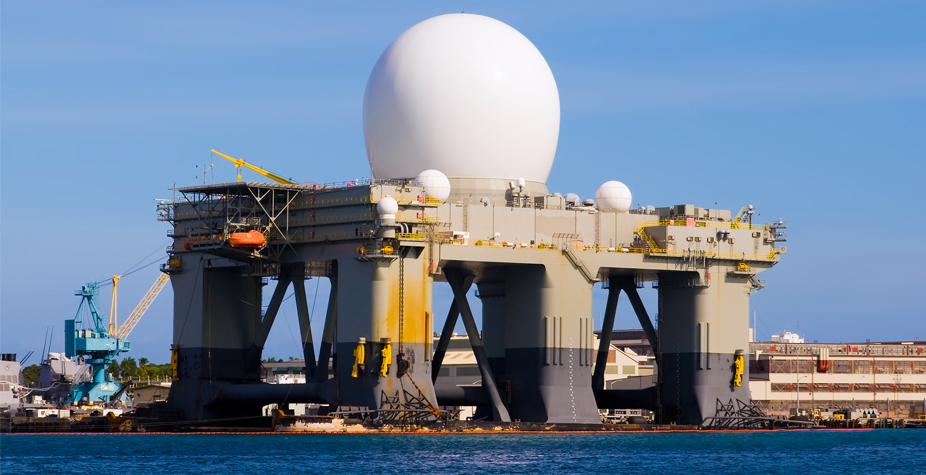
Some radars are early warning radars. They can detect at longer ranges because they operate at lower frequencies (UHF band), but they can’t be used for discrimination and intercept. Shorter-range radars, like those operating in the X-band, are more precise, can perform discrimination, and can be used to guide the interceptor.
Radar systems are continuously evolving, and the modern radar isn’t limited by what the antenna can see — it’s limited by what the processor can do.
As waveforms become more complex and threats evolve at a faster pace, the radar signal chain is shifting toward distributed, edge-based processing that can analyze, fuse, and act on data in microseconds.
That’s where Curtiss-Wright comes in.
Under the Golden Dome for America initiative, we’re helping our nation’s radar OEMs bring their systems to life with next-generation embedded computing technologies — innovations that translate into operational advantage.
Digital Processing for Radars
Our latest NVIDIA® Blackwell–based processors deliver AI-class performance optimized for digital signal processing, beamforming, and sensor fusion. Combined with VITA-aligned 100 Gb Ethernet architectures, we’re enabling radar designers to move unprecedented amounts of data with deterministic precision.

Did You Know?
Curtiss-Wright’s VPX3-730 features the NVIDIA RTX PRO™ 5000 Blackwell GPU, is SOSA-aligned, and delivers 15 times the performance of other accelerated computers, making it ideal for radar and sensor fusion applications that need deep learning inferences and powerful math engines for AI workloads.
Why it Matters
Across the radar community, two converging trends are reshaping system design.
Cognitive and Adaptive Radar Architectures
Tomorrow’s radar must think as well as see. New adaptive electronically scanned array (AESA) systems utilize waveform agility and digital beamforming to recognize the environment and re-optimize in real-time — switching seamlessly between surveillance, tracking, and imaging in milliseconds. These cognitive radars rely on substantial processing headroom to train, infer, and make decisions locally. As multi-channel front ends proliferate, computing power must migrate closer to the array itself. That is the essence of edge computing in radar — and it’s exactly where Blackwell-class embedded GPUs and AMD Versal™-based FPGA technologies change the equation.
Data-Driven Integration at Scale
Every beam, channel, and sensor mode produces torrents of data that must be moved and correlated instantly. Traditional architectures can’t sustain that bandwidth. The industry’s pivot to open, VITA-aligned 100 Gb Ethernet fabrics reflects a hard requirement: deterministic, loss-free transport between sensors, processors, and storage across a modular backplane. High-speed networking isn’t a luxury anymore; it’s the nervous system of the radar.
Curtiss-Wright’s work at this intersection — pairing compute density with transport bandwidth — ensures that America’s most advanced radar systems remain both agile and sustainable. We don’t build the radar; we build the capability that lets it adapt, learn, and defend. From early flight to today’s digital edge, our focus has always been the same: engineering the technology that protects America’s future.
Learn more about Curtiss-Wright’s innovative solutions for digital radar processing by exploring our Fabric100 technology.
FAQs
- What is Golden Dome for America?
Golden Dome for America is a proposed multi-layered missile defense system for the United States. Learn more here. - What type of support does Curtiss-Wright provide for Golden Dome?
One type of support Curtiss-Wright provides for systems related to the Golden Dome for America initiative is digital radar processing, leveraging our latest NVIDIA Blackwell-based processors. - How are cognitive and adaptive radars supporting Golden Dome?
AESA radars are emerging as a better option than traditional PESA radars due to their ability to provide better tracking of multiple targets with lower latency, although they do require more computing power.

Subscribe Today!
Subscribe to our blog and receive a monthly email that keeps you up-to-date with the latest news and insights from Curtiss-Wright.

Josh Powell
Senior Manager, Business Development
Josh is a recognized Integrated Air & Missile Defense (IAMD) Subject Matter Expert. He is a Joint Interface Control Officer (JICO), TOP GUN Air Intercept Controller, and Marine Corps Weapons and Tactics Instructor. He served as the Tactical Air Operations Center Chief at Marine Aviation Weapons and Tactics Squadron 1, as the HQMC Aviation Digital Interoperability SME. Since retiring, he has held various multi-domain systems integration and business development roles in the industry over the last 10 years for C5ISR projects.
