Signal Sampling, Filtering, and Visualization
Breadcrumb
- Curtiss-Wright
- Defense Solutions
- Media
- Blog
- Blog Series
Flight test instrumentation engineers rely on their installed sensors to accurately measure phenomena such as temperature, vibrations, and stress. The final result is shown on a screen, but this data has likely been converted into the digital domain, filtered, and processed for display. These changes must be understood to ensure that what is viewed is interpreted properly, making it useful as evidence for certification and enabling informed decisions. The following blogs explore these subjects in more detail.
Signal Sampling, Filtering, and Visualization
Understanding Signal Filtering in Data Acquisition
Today, flight test instrumentation (FTI) engineers install a variety of sensors throughout an aircraft to measure phenomena such as temperature, vibrations, and stress.
Understanding Signal Filtering in Data Acquisition
Today, flight test instrumentation (FTI) engineers install a variety of sensors throughout an aircraft to measure phenomena such as temperature, vibrations, and stress.
Visualization Effects from Sampled Data in FTI
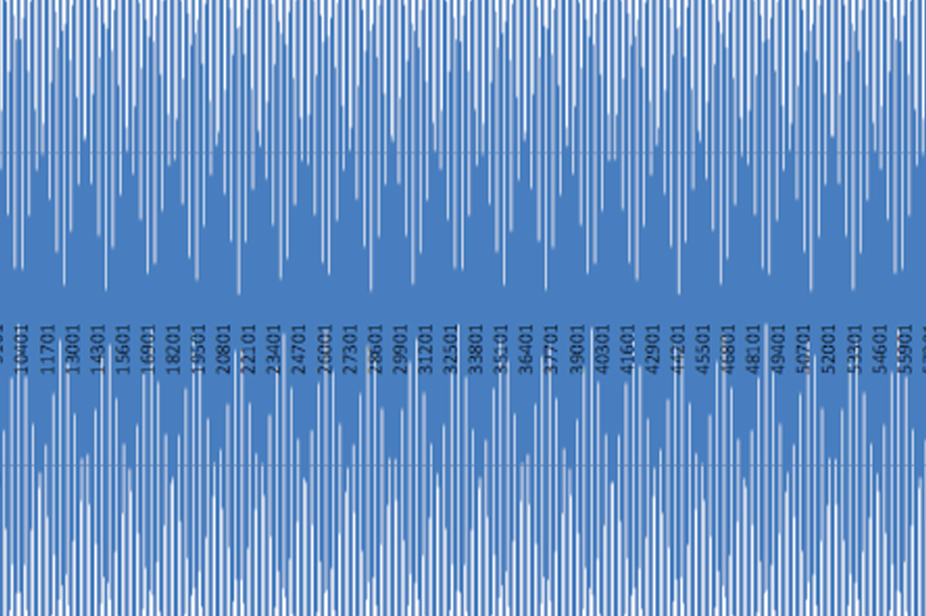
In signal processing, sampling is the reduction of a continuous signal to a discrete signal. The sampling process itself can introduce visual effects that, if not understood, can mislead our analysis. The following explores some of these effects, as well as other visualization phenomena.
Visualization Effects from Sampled Data in FTI
In signal processing, sampling is the reduction of a continuous signal to a discrete signal. The sampling process itself can introduce visual effects that, if not understood, can mislead our analysis. The following explores some of these effects, as well as other visualization phenomena.