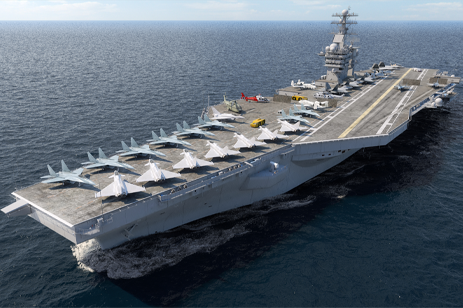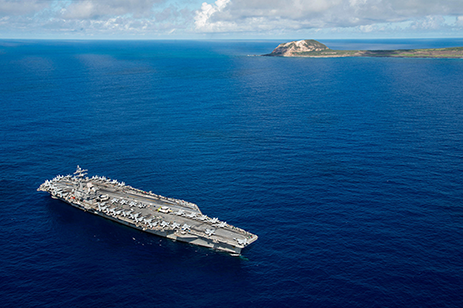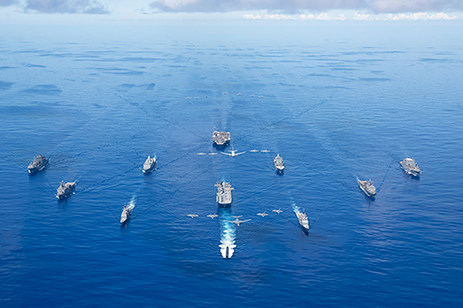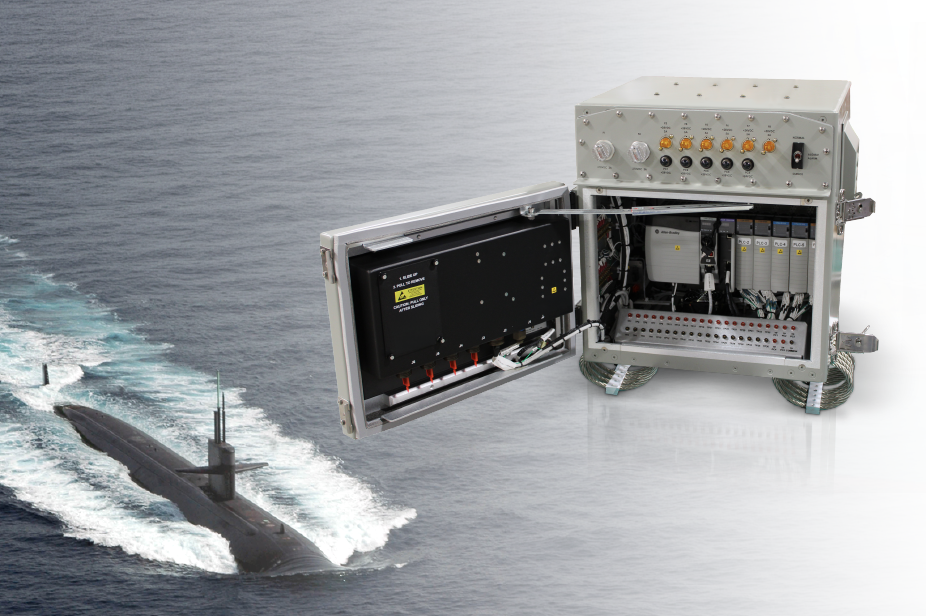
On every naval mission, advanced electronics pulse at the heart of the ship. Navigation and mapping systems guide the vessel through contested waters.
Radar arrays detect threats beyond the horizon. Communication suites connect crews with commanders worldwide. Combat systems deliver firepower with precision.
These systems are the sailors’ lifeline. Without them, the fleet is blind, deaf, and vulnerable. But as advanced as the hardware and software might be, their survival depends on something less visible and often overlooked: the rugged enclosure that houses them.
The Silent Protector
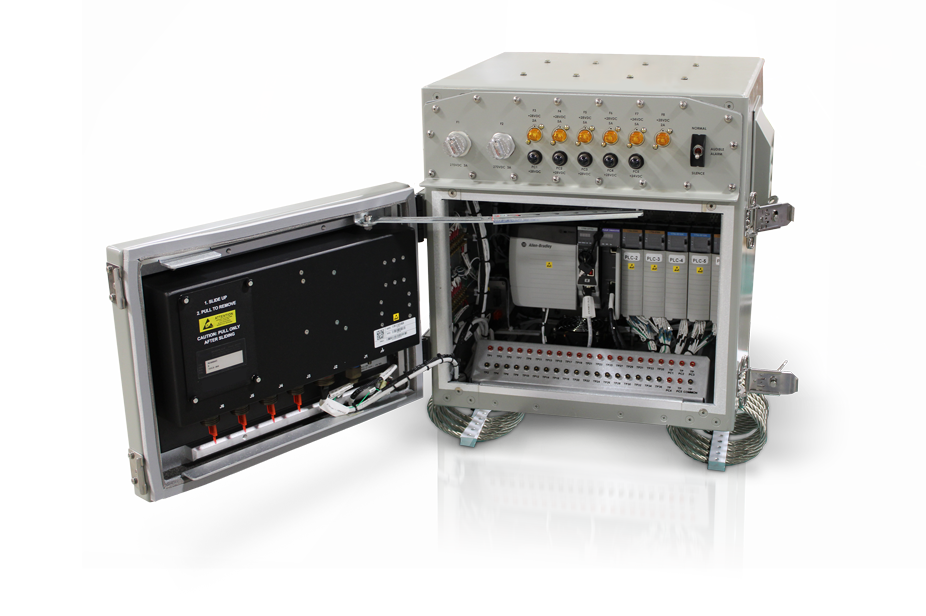
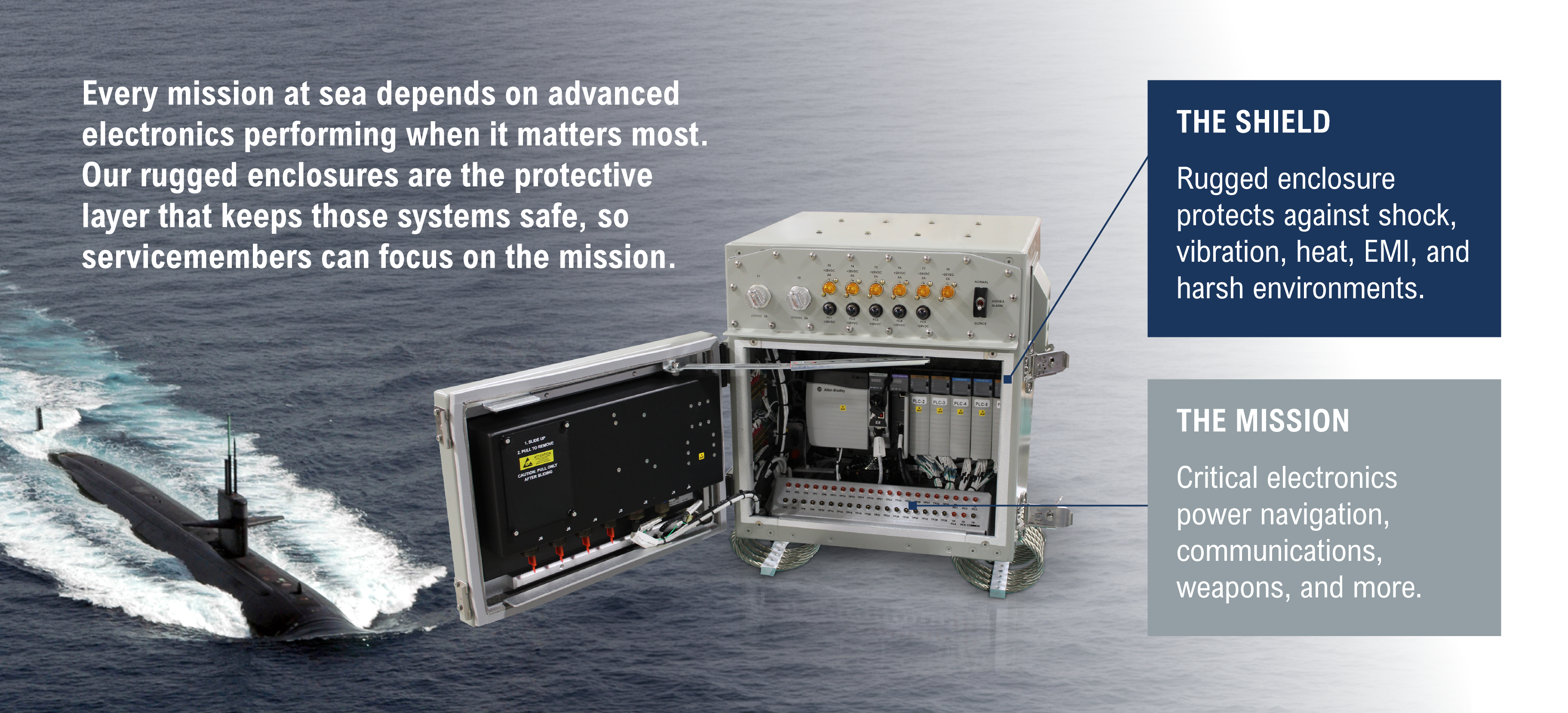
Enclosures are the unsung body armor of naval electronics. They absorb shock from collisions, dampen vibrations from engines and weapons, block electromagnetic interference, and channel heat away from mission-critical processors. They keep water, humidity, and contaminants from corroding sensitive components.
Much like a service member's protective vest, the enclosure's job is to take the hit—so the electronics inside don't have to. This protective layer keeps systems alive in environments where failure isn't an option.
Yet, in too many programs, enclosures often become unexpected risks. The prime contractor’s resources are largely dedicated to overall system development and deployment, where their core expertise lies. As a result, they may have no choice but to design and build enclosures in-house late in the program, further stretching their resources. What seems like a small piece of the puzzle often becomes a weak link in the entire readiness chain.
When the Shield Fails
It's easy to think of enclosures as mechanical structures—made of steel and fasteners, with connectors and wires. However, every design choice has a direct impact on military personnel who rely on it. The risks are not theoretical. Consider the consequences when an enclosure is poorly designed or inadequately tested:
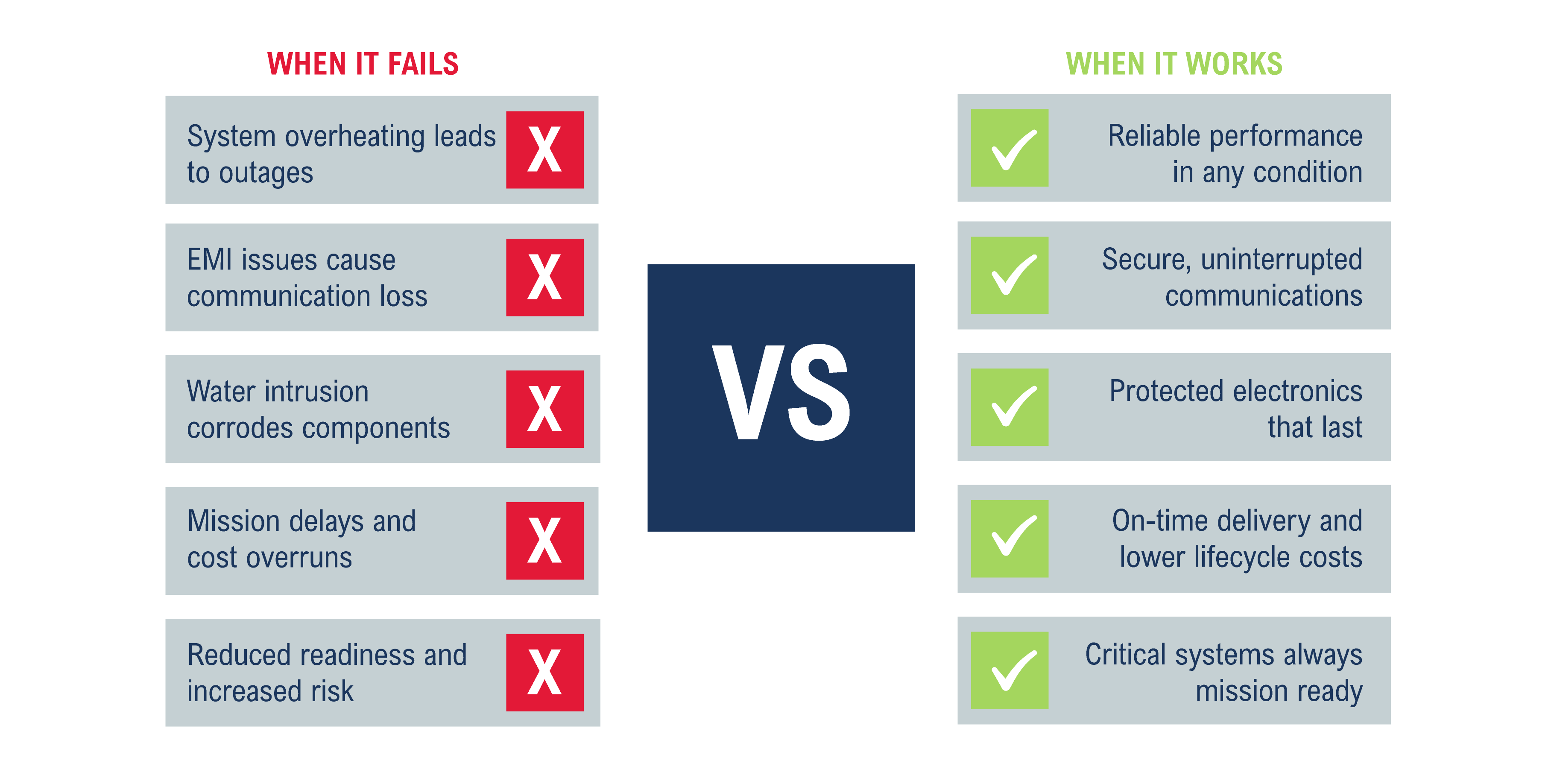
- Mission delays: If a rack fails qualification, redesigns can set programs back months. Those months translate directly into lost fleet capability.
- System outages: Overheating, EMI issues, or water ingress can cause electronics to fail mid-mission. For a service member relying on situational awareness, that outage can be life-threatening.
- Higher lifecycle costs: Enclosures designed without modularity are more challenging to service and upgrade, driving up maintenance time and shipyard costs over decades of use.
A weak enclosure doesn't just add cost. It undermines trust in the system, delays deployment, and ultimately erodes the Navy's readiness at a time when adversaries are advancing rapidly. On the other hand, when enclosures are engineered for reliability, scalability, and ease of maintenance, sailors gain confidence that the systems they depend on will be there when needed most. In this sense, the enclosure becomes more than a protective layer—it becomes a guarantee of operational trust.
The Shipboard Reality
Installing enclosures on naval vessels is not a simple task. These structures are large, heavy, and difficult to maneuver through a ship's narrow hatches and passageways. Too often, crews must cut bulkheads or reroute ship infrastructure just to bring racks below deck. This process adds significant cost, increases schedule risk, and creates some of the leading causes of shipyard injuries.
The Navy can't afford solutions that ignore these realities. Enclosures must be engineered not only to survive the mission but also to be installed and maintained safely. Hatchable and modular designs that break down into subassemblies under 70 pounds allow crews to move systems without cutting into the ship, saving time, money, and lives.
A Proven Protective Layer
Curtiss-Wright's Rugged Enclosure & Console engineering experts built a portfolio of proven rugged enclosure and console products to serve this exact role: the shield that protects electronics so sailors can focus on the mission. For over 25 years, our enclosures have safeguarded mission systems across every class of U.S. Navy surface and subsurface combatant vessel. Programs such as CANES, SSEE, SQQ-89, and MOS-MOD all rely on this proven protective layer.
Key advantages include:
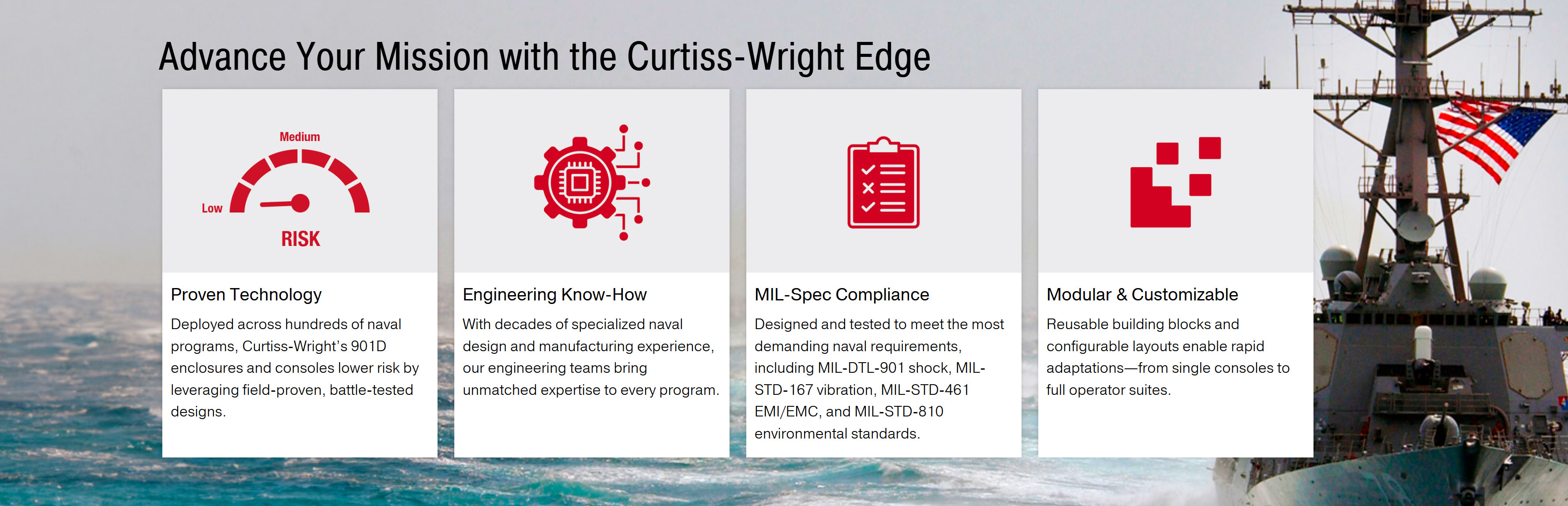
- Modular building blocks: Leveraging designs and components previously qualified to MIL-DTL-901, MIL-STD-167, MIL-STD-461, and MIL-STD-810 standards accelerates schedules and reduces program risks.
- Advanced cooling solutions: Air, liquid, and hybrid approaches maximize efficiency and adapt to future thermal loads.
- Ruggedized power delivery: Redundant sources, UPS backup, and smart distribution systems that comply with MIL-STD-1399 and MIL-STD-461, ensuring continuous operation.
- Shipyard-ready design: Hatchability and modularity, simplify installation, enable safe handling, and reduce lifecycle maintenance costs.
- Proven pedigree: In 2024 alone, Curtiss-Wright shipped more than 1,500 racks and consoles from AS9100-certified facilities, demonstrating scale and repeatable reliability.
Why It Matters Now
The Navy is in the midst of a technological race. Near-peer adversaries are rapidly advancing naval capabilities. Every delay in delivering qualified, mission-ready systems risks ceding an advantage.
Enclosure failures are preventable delays. By partnering with a proven leader in enclosure design and integration from the start, prime contractors remove one of the most significant hidden risks in program delivery. They can also shift focus to executing tech refreshes, lifecycle upgrades, and evolving mission requirements with greater efficiency- all while reducing cost and schedule risk.
The Path Forward
For prime contractors, the choice is clear:
- Treat enclosures as core to readiness. They are not accessories; they are mission-critical.
- Leverage proven building blocks. Don't start from scratch when proven enclosure solutions already exist.
- Engineer for lifecycle. Make maintenance and upgrades easier for crews at sea and shipyards ashore.
- Partner with specialists. Tap into decades of domain expertise rather than stretching internal resources thin.
By following this path, primes reduce internal engineering loads, deliver more value to the Navy, and protect the service members who rely on these systems.
Final Word
Enclosures may never be the headline feature of a naval program. They don't have the cutting-edge appeal of a new radar or the visible presence of a combat system. But they are the shield beneath the surface, the silent protector that ensures every other system works as intended.
When enclosures are overlooked, missions are at risk. When designed smartly, with proven building blocks and lifecycle efficiency in mind, they become a force multiplier for naval readiness.
At Curtiss-Wright, we believe the shield deserves as much attention as the systems it protects. Because when enclosures are stronger, smarter, and proven, so is the fleet.

Subscribe Today!
Subscribe to our blog and receive a monthly email that keeps you up-to-date with the latest news and insights from Curtiss-Wright.

Nastacia Chapman
Product Marketing Manager
Nastacia Chapman is a marketing and communications professional at Curtiss-Wright Defense Solutions, where she focuses on rugged integrated systems, embedded computing technologies, and defense modernization initiatives across air, ground, and naval platforms. She specializes in translating complex engineering capabilities into customer-focused messaging that highlights how modular, mission-ready solutions support today’s evolving defense environments. Her work spans product marketing, digital strategy, thought leadership, and integrated campaign development for aerospace and defense applications.