For decades, surveillance video in defense and aerospace has been treated as a passive asset.
Sensors capture it. Recorders store it. Analysts review it later.
This model made sense when bandwidth was limited, processing lived far from the mission, and security was something applied after the fact. But modern missions have quietly outgrown this paradigm, and the consequences are showing up everywhere: latency, overload, missed insights, and risk.
What if this video could do more at the moment it was captured?
What if it could analyze, protect, and respond in real time, right where the mission happens?
The Hidden Problem: We’re Drowning in Video, Starving for Insight
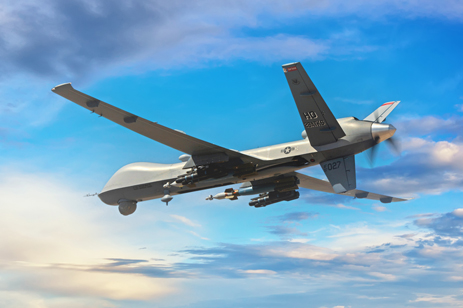
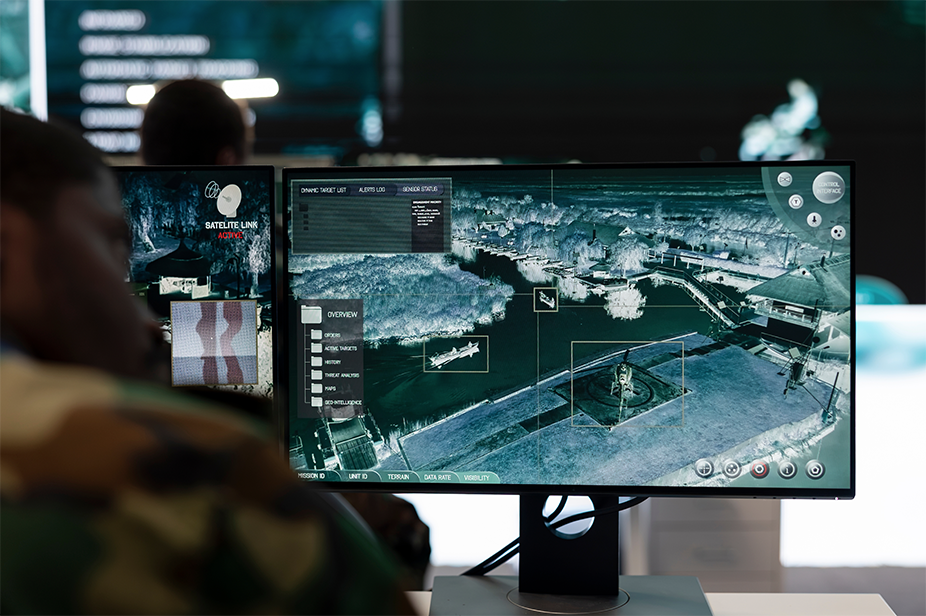
ISR platforms, UAVs, manned aircraft, ground vehicles, and maritime systems are producing unprecedented volumes of video and sensor data:
- High-resolution EO/IR feeds
- Multi-angle mission cameras
- Radar and telemetry streams
- Long-endurance surveillance video
Yet most systems still rely on a record-first, analyze-later workflow.
That gap creates real operational problems:
- Latency kills relevance: By the time surveillance video is reviewed, the moment has passed.
- Bandwidth becomes the bottleneck: Impracticality of transmitting multi-gigabit sensor data off-platform.
- Operators are overloaded: Human eyes are still doing work that machines could handle instantly.
- Security is bolted on, not built in: Encryption often protects stored data and communications, but not the analytics pipeline.
The result? Missions generate more data than they can analyze, while threats continue to move faster.
The Constraint We Rarely Question: Why Is Intelligence Separated from Storage?
There’s an assumption baked into most architectures:
Capture happens here. Processing happens there. Security wraps around everything later.
But this separation introduces friction at every step.
- Data must move before it can be understood
- Intelligence depends on connectivity
- Security becomes a tradeoff against performance
What if those boundaries didn’t exist?
What if video capture, AI inference, and secure storage were a single, unified capability, designed to operate at the tactical edge, under real-world constraints?
A New Capability Emerges: Video That Thinks While It Records
Imagine a system where:
- Video streams are captured at mission-relevant fidelity
- AI models perform real-time inference on live feeds
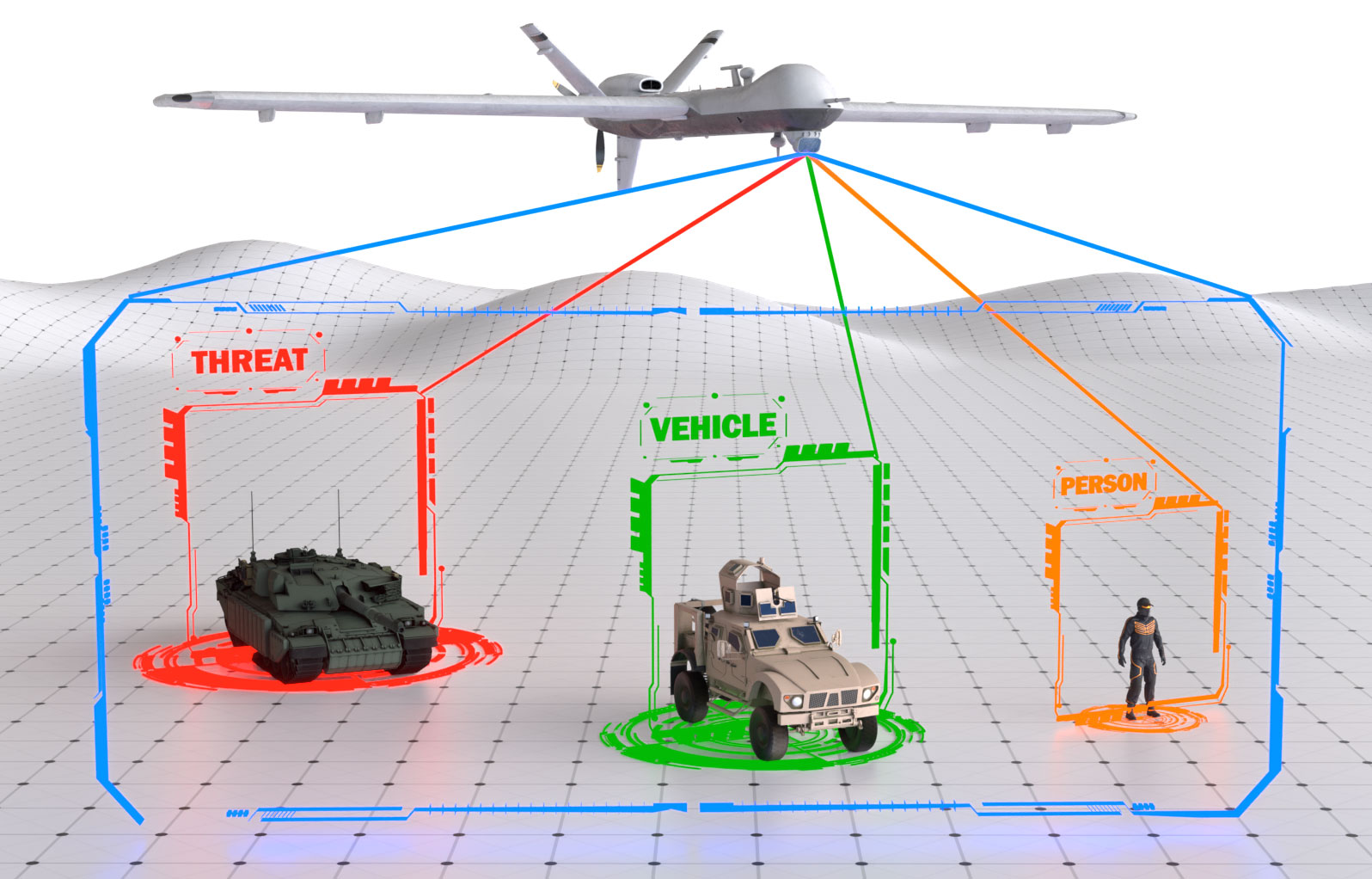
- Targets are detected, classified, and tracked immediately
- Only relevant data is flagged, annotated, or prioritized
- Everything, raw video and derived intelligence, is protected with NSA-approved encryption
Not as a future upgrade.
Not as a cloud dependency.
But as a native capability of the recorder itself.
This changes what is possible.
Problems This Capability Solves, Including the Ones We Don’t Always See
- Real-Time Situational Awareness Without Cognitive Overload
Operators can focus on decision-making, not on scanning multiple screens for critical information, when AI highlights what matters: vehicles of interest, emerging threats, and pattern deviations. - Intelligence That Survives Disconnection
When inference happens at the edge, missions don’t fail when links degrade or disappear. Insight is created and secured locally. - Sensor Fusion Without the Complexity Tax
EO/IR, radar, and telemetry data no longer live in silos. Fused analytics create a unified operational picture that’s faster to understand and harder to deceive. - Secure-by-Design AI Inference on Video
When encryption protects both recorded data and AI-generated insight, sensitive intelligence is never exposed, even if storage is removed, lost, or captured. - Faster, More Accurate Battlefield Assessment
Autonomous platforms can detect damage, confirm outcomes, and flag anomalies immediately, reducing risk, redundancy, and wasted resources.
The Bigger Shift: From Passive Video to Active Intelligence
This is ISR efficiency, changing the role of video in mission systems.
- Video is no longer just evidence.
- It’s no longer just data.
- It becomes an active participant in the mission, observing, interpreting, and protecting itself in real time.
Much like the smartphone camera didn’t replace cameras. It redefined how and when images were used. This convergence redefines how intelligence is created at the edge.
Once you see it working together, it’s hard to imagine going back.
Seeing the Shift in Action
Capabilities like this don’t emerge in isolation. They take collaboration between companies that understand both the operational realities of the tactical edge and the technical demands of securing and processing data where it’s created.
By leveraging Curtiss‑Wright’s proven leadership in rugged, NSA-approved secure storage and mission-critical recording, and integrating a specialized AI and video processing module from WOLF, we’ve built a live demonstration that brings this concept to life.
By leveraging Curtiss Wright’s proven leadership in rugged, and integrating WOLF’s specialized AI and video processing module, we’ve built a live demonstration that brings this concept to life.
The demo shows how high-speed video capture, real-time AI inference, and NSA-grade secure storage can operate as a single, cohesive capability, creating and protecting intelligence the moment it’s generated, without relying on reachback or post-mission analysis.
It’s not a product pitch.
It’s a working example of how video stops being inactive and starts participating in the mission.
If you’re exploring next-generation ISR, autonomous platforms, or edge AI architectures, this capability is worth experiencing firsthand. Contact us for more information or to schedule a demo.
FAQs
- What problem does edge video intelligence actually solve?
Most platforms already collect high-quality video, but turning that video into actionable intelligence still depends on bandwidth, analyst availability, and post-mission workflows. This delay limits operational effectiveness. Edge video intelligence solves the timing problem: it allows insight to be created the moment video is captured, turning a passive data stream into real-time mission value. - How is this different from traditional onboard video processing?
Traditional processing is usually a separate subsystem, one more box in the architecture. By contrast, edge video intelligence integrates high-speed capture, real-time inference, and high-assurance security into a single, unified capability. This eliminates the latency and complexity of moving data between components and ensures both raw video and derived intelligence are protected from the moment they exist. - Does this require constant connectivity or cloud reachback?
No. The core advantage of this approach is that it generates and protects intelligence locally, at the tactical edge. Connectivity can enhance operations, but it is no longer a prerequisite for generating insight. This makes the capability particularly valuable in denied, degraded, intermittent, and limited (DDIL) environments. - How does combining capture, inference, and secure storage benefit airborne and unmanned platforms?
When these functions are built as separate pieces of hardware, each one needs its own power, cooling, connectors, and cabling. That adds size, weight, and complexity to the platform. When these functions work together inside a single, integrated capability, much of that duplication disappears. The system no longer needs to move large amounts of video between multiple boxes, saving power and reducing heat. The end result is a smaller, simpler, more efficient solution that is easier to fit onto space-constrained vehicles and easier to manage over the life of the platform.

Subscribe Today!
Subscribe to our blog and receive a monthly email that keeps you up-to-date with the latest news and insights from Curtiss-Wright.

Chad Augustine
Principal System Architect
Chad Augustine is a Principal System Architect at Data Solutions, where he focuses on secure, high-performance computing solutions for mission-critical applications.
With nearly 30 years of experience in the Defense and Aerospace industry, Chad has built a career specializing in rugged, deployable systems that operate in the most demanding environments. His expertise spans system architecture, secure data solutions, and high-speed processing technologies tailored for military and aerospace applications.
At Data Solutions, Chad applies his deep technical knowledge to drive innovation in secure, high-reliability computing, ensuring that next-generation defense and aerospace systems meet the evolving needs of modern warfare and intelligence operations.