Everyone in defense is talking about Edge AI, but very few are talking about the hard parts. The uncomfortable parts. The parts that don’t fit neatly into glossy AI roadmaps or vendor demos. Because running AI in a lab is easy. Running AI on a defense platform, in 50 °C heat, that’s vibrating across rough terrain, or flying at altitude with a power budget measured in watts, all while processing multimodal sensor data in milliseconds…well, that’s something else entirely.
Thermals become the enemy. Power budgets collapse under real workloads. Data pipelines choke long before the model does. Interconnects become bottlenecks. And the SWaP envelope (the immovable box every engineer must design within) forces tradeoffs that most commercial AI teams never have to consider.
Let’s take a candid look at those realities. Not the hype, not the theory, the engineering truths that determine whether AI at the tactical edge actually works.
The Reality of Edge AI: The Model is Dependent on Everything Around it
The Harsh Truth About Thermals
Thermals are the first and most unforgiving constraint in Edge AI. GPUs generate a lot of heat, and some edge platforms don’t have the luxury of active cooling, airflow, or large heat sinks.
Why Thermals Matter More Than FLOPS
- Overheating forces throttling
- Throttling kills inference speed
- Slower inference kills mission effectiveness
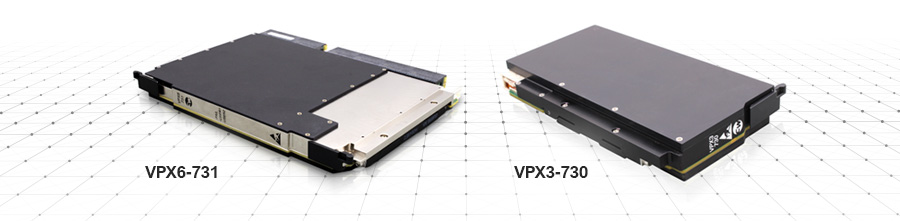
This is why ruggedized GPU modules like the VPX6-731 and VPX3-730 use conduction cooling, advanced heat pipes, and tightly engineered thermal paths to maintain performance in environments above 50 °C.
Power Isn’t a Resource. It’s a Constraint
Edge platforms don’t get to plug into a wall. They run on batteries, vehicle power, or onboard generators. Every watt matters.
The SWaP Equation
SWaP, it’s a hard boundary.
- Size: Limited by platform geometry
- Weight: Limited by payload capacity
- Power: Limited by mission duration and platform design
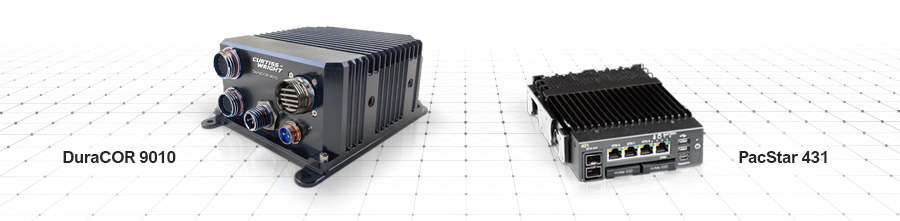
This is why SWaP‑optimized systems like the DuraCOR 9010 and PacStar 431 shine in ultra-constrained environments. These units package GPU supercomputer modules to deliver meaningful AI performance in compact, deployable packages, enabling autonomy and sensor fusion even on platforms with extremely tight power and thermal budgets.
Data Bottlenecks Are the Silent Failure Mode
Everyone talks about model performance. Few talk about the data pipeline that feeds it.
Movement is the Real Bottleneck
- High-resolution EO/IR
- LiDAR
- Radar
- RF signals
- Telemetry
- Environmental sensors
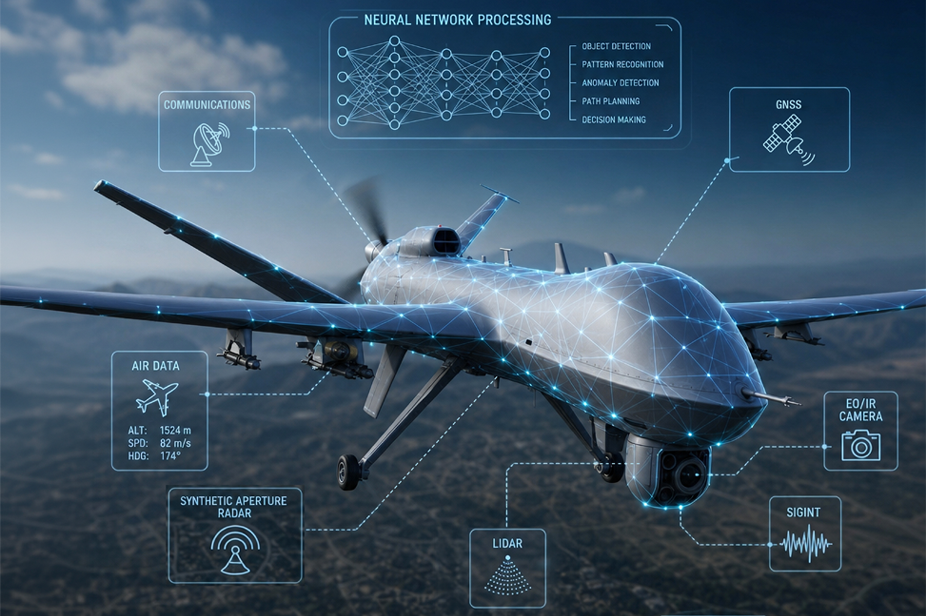
All of it must be ingested, synchronized, and processed in milliseconds.
This is where high-bandwidth GPU architectures, especially the VPX6-731 with dual GPUs, become essential. They’re built to ingest and process massive sensor loads without choking the pipeline.
Ruggedization Equals Survival
Commercial AI hardware isn’t built for shock, vibration, EMI, radiation, or extreme temperatures. Defense hardware must survive and thrive in all of it.
Why Ruggedization Changes Everything
- Protective layers trap heat
- EMI shielding adds weight
- Radiation hardening limits component choice
- Shock/vibration require reinforced mechanical design
Security adds another layer of complexity. Edge AI systems must operate in contested environments where cyber threats, spoofed sensors, and physical tampering are real risks. Zero trust principles don’t stop at the network boundary. They extend all the way down to firmware, boot chains, and data-at-rest protection. This is why rugged platforms increasingly pair compute with NSA-approved encrypted storage, ensuring mission data remains protected even if the platform is compromised or recovered by an adversary.
Integration risk is the silent schedule killer. Even when the hardware is rugged and the software stack is mature, mismatched interfaces, inconsistent drivers, thermal surprises, and platform‑level qualification issues can stall programs for months. Defense integrators need systems that are pre‑validated, interoperable, and predictable under load, because every redesign, retest, or requalification cycle adds cost, delays fielding, and increases program risk.
This is why VPX modules, servers, and mission computers — and the encrypted storage that protects their data — exist. They’re engineered from the ground up for the environments where defense systems actually operate.
The GPU & Edge Compute Advantage: Hardware Built for the Hard Problems
VPX6-731: Maximum GPU Performance for ISR and EW
The VPX6-731 is a high-performance 6U VPX GPU solution, featuring dual GPUs. It’s built for missions where latency, throughput, and real-time sensor fusion decide outcomes.
Ideal For
- High-performance radar
- SIGINT
- EO/IR processing
- Multi-sensor fusion
- Deep learning inference at scale
- Autonomous vehicle perception
This is the board you choose when “good enough” isn’t good enough.
VPX3-730: High-Density GPU Acceleration in 3U
The VPX3-730 delivers GPU performance in a compact 3U form factor, ideal for platforms with limited space but high compute demands.
Ideal For
- SWaP-constrained deep learning inference
- High-performance radar
- Signals intelligence
- EO/IR
- Autonomous vehicles
It’s the workhorse for programs that need serious GPU acceleration in a smaller footprint.
PacStar 431: Modular GPU Server for Tactical Edge Compute
The PacStar 431 is a rugged, modular GPU-accelerated AI server designed for tactical edge deployments where networking, sensor ingest, and compute must coexist in a compact, low-SWaP package.
Ideal For
- Real-time edge compute for command and control (C2)
- AI/ML inference workloads
- Multi-sensor data analytics
- Manned and autonomous systems
- Deployments requiring modular, field replaceable components
This is the right choice when you need flexible, scalable compute that can be fielded quickly.
DuraCOR 9010: High-End AI Mission Computing in an Ultra-Rugged, SWaP-Optimized Package
The DuraCOR 9010 delivers the latest GPU–class performance in a rugged, small‑form‑factor mission computer designed for platforms where space, power, and survivability are non‑negotiable. It ingests massive volumes of sensor data: video, radar, LiDAR, and EW signals, and processes them locally with extremely low latency.
Ideal For
- Autonomous UAVs, UGVs, and maritime systems
- Real-time sensor fusion and object detection
- On-platform AI inference in denied/disconnected environments
- Mission computing in small, thermally constrained spaces
- Multi-sensor ISR and EW payloads requiring instant processing
With modular I/O, extreme ruggedization, and the ability to run large, complex AI models directly at the edge, the DuraCOR 9010 enables platforms to see, think, and act in milliseconds, even in the harshest operational environments.
Edge AI isn't Easy, but it's Worth Doing Right
Edge AI is a collection of hard engineering problems that must be solved before a single model can run reliably in the field. Thermals, power, bandwidth, ruggedization, lifecycle support, and SWaP constraints shape every design decision. Edge AI can deliver real-time operational advantages, but only when the hardware is built to survive the mission.
That’s where ruggedized GPU systems make all the difference. Curtiss-Wright’s extensive portfolio is a purpose-engineered response to the realities of the tactical edge, delivering the high throughput, efficiency, and resilience needed to transform raw sensor data into immediate, actionable intelligence.
The battlefield won’t get easier. The data won’t get smaller. The timelines won’t get longer. But with the right hardware foundation, Edge AI becomes an operational advantage even in the harshest environments, under the toughest constraints, where every millisecond counts.
Rugged Edge AI Hardware Comparison
| Product | Type | Ideal Use Cases | Profile | Key Strengths |
|---|---|---|---|---|
| VPX6‑731 | 6U VPX GPU Card | ISR, EW, radar, SIGINT, multi‑sensor fusion | Higher SWaP | Maximum throughput, lowest latency, multi‑GPU compute |
| VPX3‑730 | 3U VPX GPU Card | SWaP‑constrained ISR/EW, autonomy, radar | Medium SWaP | High‑density GPU acceleration in a compact form factor |
| PacStar 431 | Modular GPU Server | Tactical edge compute, multi‑sensor ingest, AI/ML workloads | Low SWaP | Modular, field‑deployable, flexible networking and compute |
| DuraCOR 9010 | Rugged AI Mission Computer | Autonomous systems, sensor fusion, object detection, mission computing | Ultra‑low SWaP | Embedded autonomy, real‑time AI at the platform edge, modular I/O |
How to get Started: A Practical Framework for Defense Programs
A Guide to Getting Started in Edge AI for Defense white paper outlines a clear, structured approach for organizations beginning their Edge AI journey.
Quick Facts: Edge AI at the Tactical Edge
Operating Conditions
- Designed for >50 °C environments
- Must withstand shock, vibration, EMI, and radiation
- Often deployed in DDIL (denied/disrupted) comms conditions
Power & SWaP Realities
- Power budgets measured in watts, not kilowatts
- Strict size and weight envelopes
- Cooling options are limited or nonexistent
Data Demands
- Sensor data growth outpacing interconnect bandwidth
- Real-time fusion of EO/IR, radar, LiDAR, RF, and telemetry
- Data movement often becomes the bottleneck
Hardware That Survives the Mission
- VPX6-731: Dual GPU 6U VPX card for ISR/EW
- VPX3-730: High-density GPU acceleration in 3U
- PacStar 431: Modular GPU server for ultra-low SWaP edge compute
- DuraCOR 9010: GPU–powered AI mission computer for embedded autonomy and sensor fusion
Bottom Line Edge AI isn’t limited by algorithms. It’s limited by physics, thermals, and the realities of the battlefield.
Key Takeaways
- Edge AI is limited more by hardware realities than algorithms. Thermals, power, bandwidth, and ruggedization shape what’s possible.
- SWaP constraints force hard tradeoffs. Every watt, gram, and cubic inch matters for UASs, ground vehicles, and soldier-worn systems.
- Data movement is the real bottleneck. Sensor proliferation is outpacing interconnect bandwidth, making GPU-accelerated solutions essential.
- Rugged GPU systems solve the problems commercial AI hardware can’t. VPX6 731, VPX3 730, PacStar 431, and DuraCOR 9010 are engineered for the harshest operational environments.
- Decision advantage depends on compute that survives the mission. Real-time AI only works when the hardware is built for the battlefield.
FAQ:
- Why is Edge AI so much harder to deploy than cloud-based AI?
Because the edge is unforgiving. Unlike cloud environments with abundant power, cooling, and bandwidth, edge platforms operate under strict SWaP constraints, extreme temperatures, vibration, shock, EMI, and intermittent connectivity. - What makes thermals such a critical challenge for GPU-based Edge AI?
High-performance GPUs generate significant heat, and edge platforms often lack the airflow or cooling infrastructure to dissipate it. Thermal throttling can cripple inference performance, making conduction cooling, heat pipes, and ruggedized thermal design essential. Curtiss-Wright’s VPX6-731, VPX3-730, and DuraCOR 9010 are engineered to maintain performance in environments above 50 °C. - How do SWaP constraints impact AI performance at the tactical edge?
SWaP is a hard boundary. Size limits form factor choices, weight affects platform stability and payload, and power budgets dictate how much compute can run at once. This is why rugged solutions like PacStar 431 and DuraCOR 9010 are so valuable: they deliver meaningful AI performance in a compact, deployable package. - Why are GPU systems preferred for ISR, EW, and autonomy workloads?
Because these missions demand real-time processing of massive sensor streams (radar, EO/IR, LiDAR, RF, telemetry) with minimal latency. The VPX6-731, VPX3-730, PacStar 431, and DuraCOR 9010 provide the bandwidth, ruggedization, and AI acceleration needed to ingest, fuse, and analyze multimodal data under harsh conditions. They’re built for the environments where defense systems operate.

Subscribe Today!
Subscribe to our blog and receive a monthly email that keeps you up-to-date with the latest news and insights from Curtiss-Wright.

Angie Giles
Product Marketing Manager
A seasoned B2B marketing leader focused on translating complex technologies into impactful customer value.