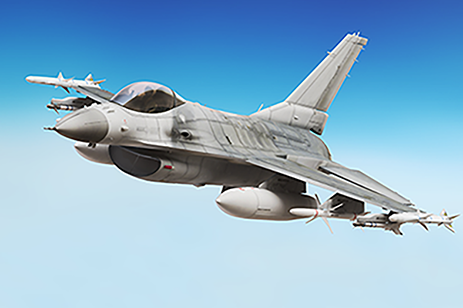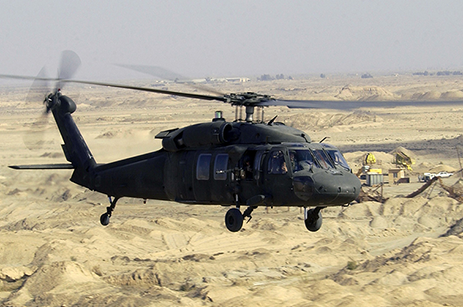
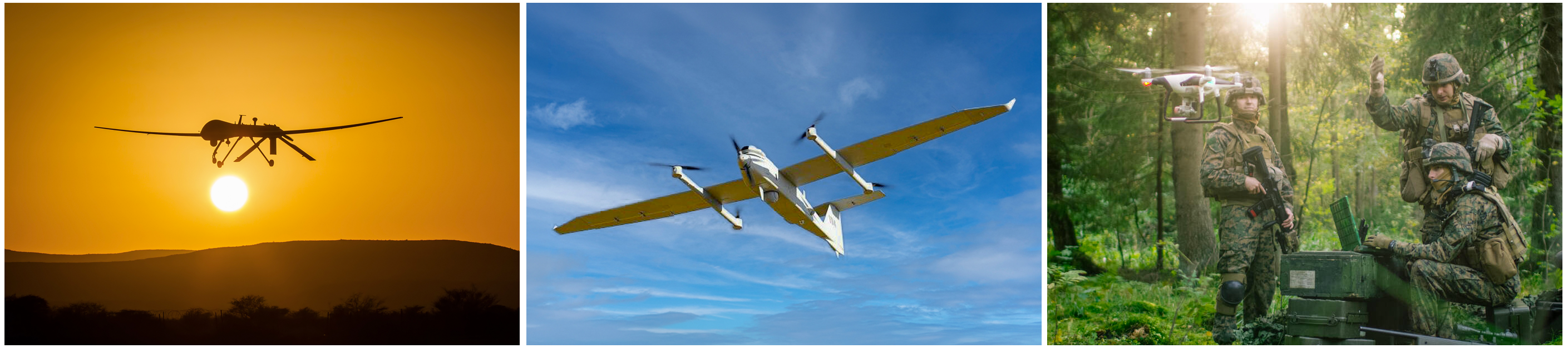
The U.S. Department of Defense (DoD) is quickly changing how it delivers technology to its forces. The Replicator Initiative, announced in 2023, aims to deploy thousands of affordable, autonomous, attritable systems across land, sea, and air. These systems are mass-producible, easily upgradable, and meant to be replaceable. Recent conflicts show the value of such large fleets, making attritable platforms central to U.S. modernization plans. Attritable systems are not disposable. They are designed to be reused regularly, produced at an affordable cost, so they can be expended without significantly affecting the overall mission cost and capability. While the loss of these uncrewed systems might be acceptable, the loss of the sensitive data they hold is not.
The Rise of Attritable Autonomous Systems
The DoD’s Replicator Initiative demonstrates a clear shift away from the lengthy, costly development timelines typical of defense procurement. Attritable systems are a key part of this strategy. They provide enough capability for complex missions at a fraction of the cost of enduring aircraft or ships.
Deploying thousands of autonomous vehicles across various domains enables commanders to operate with greater flexibility and take calculated risks without endangering personnel. This strategy of using multiple low-cost platforms doesn’t replace traditional assets; instead, it works alongside them. It enables traditional high-value platforms to focus on complex missions while attritable systems expand coverage and take on risk.
What Makes a System Attritable?
The DoD categorizes uncrewed systems into three categories: enduring, attritable, and expendable.
- Enduring systems: designed for high-cost, multi-mission use and always return to base
- Attritable systems: a balance between reusable and affordable, while their loss is acceptable in high-risk environments
- Expendable systems: lower-cost, and single-use by design
Uncrewed aircraft systems (UAS) are categorized into Groups 1 through 5 based on specific attributes, such as maximum weight, altitude, and speed (Table 1). UAS classified as Group 2 and Group 3 are often where attritable platforms fall, balancing affordability with operational capabilities. These platforms are cost-effective enough to be mass-produced yet capable of carrying meaningful payloads, such as ISR sensors or communications gear. This makes Groups 2 and Group 3 a common reference point when discussing attritable UAS platforms. They are being rapidly deployed as the DoD shifts toward more distributed and autonomous operations.
| Expendable | Attritable | Enduring | |||
|---|---|---|---|---|---|
| Group 1 | Group 2 | Group 3 | Group 4 | Group 5 | |
| Maximum Weight (lb) | 0-20 | 21-55 | <1320 | >1320 | >1320 |
| Normal Operating Altitude (AGL, ft) | <1,200 | 1,000 – 10,000 | 2,500 – 18,000 | 2,500 – 18,000 | >18,000 |
| Speed (kts) | 100 | <250 | <250 | Any Airspeed | Any Airspeed |
Why Losing the Platform Isn’t the Real Risk
Attritable platforms can be lost without compromising a mission, unless the data they carry is exposed.
Even the smallest uncrewed systems gather and store highly sensitive information, including:
- ISR sensor feeds
- Targeting data
- Geolocation and route histories
- Command-and-control metadata
- Mission plans and flight paths
The Growing Intelligence Value of Captured Drone Data
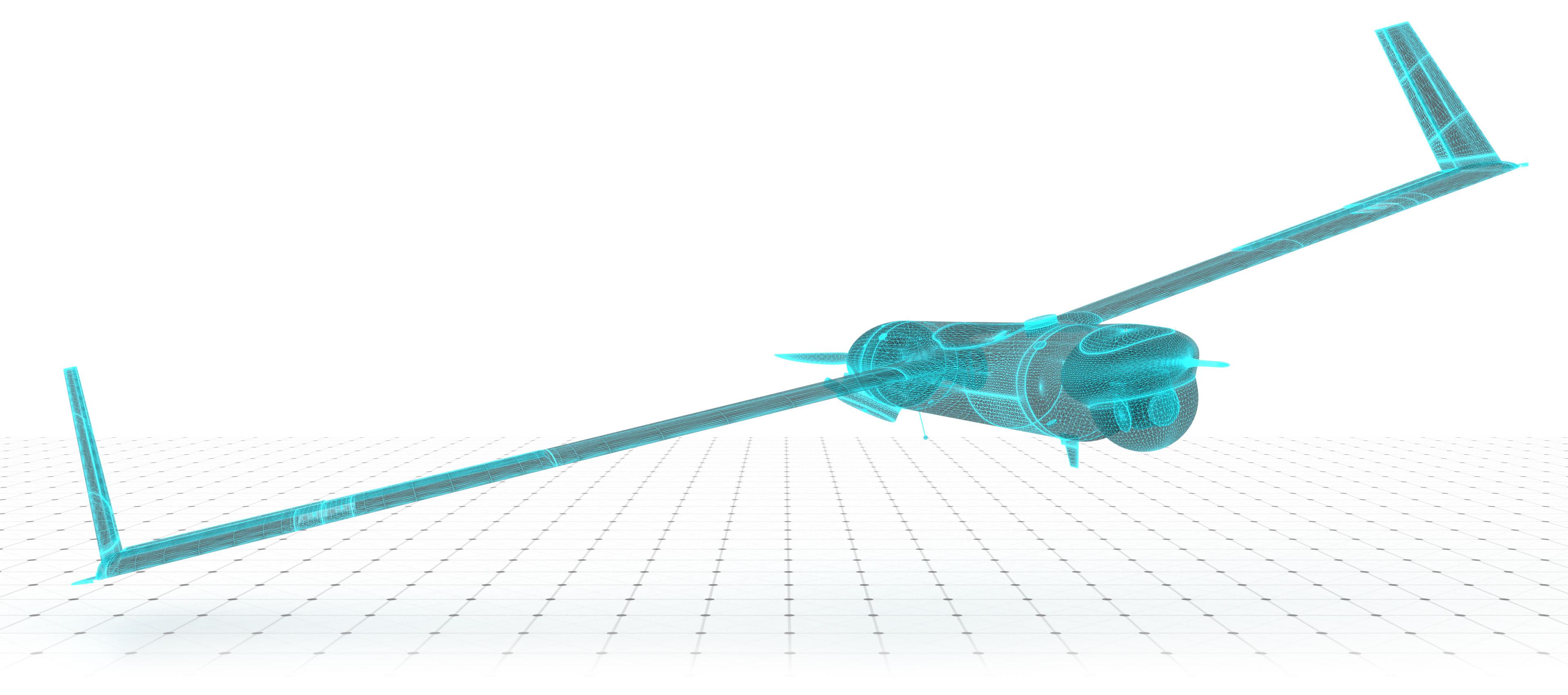
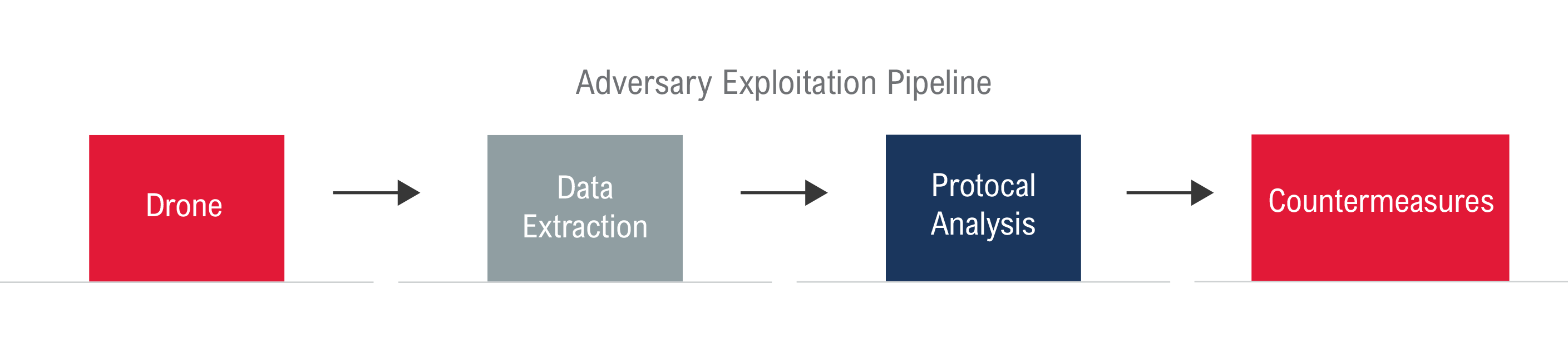
In contested environments, these systems may be jammed, forced down, or captured. While losing the platform itself is tolerable, losing the unprotected data could be catastrophic. A single attritable asset falling into adversary hands could reveal tactics, capabilities, and targets, giving away far more than just a drone. Many adversaries invest heavily in exploiting captured uncrewed systems to gather intelligence, reverse-engineer communications protocols, refine jamming or spoofing strategies, and extract insights about U.S. tactics. As autonomous technology and mission capabilities advance, both the volume and importance of stored data grow.
Why Data-at-Rest Encryption Is Critical for Attritable Systems
Attritable platforms, by design, operate autonomously in hostile, high-risk environments, where the likelihood of loss is high. They collect large amounts of mission-critical intelligence during operations. This can include ISR imagery, targeting information, navigation routes, and communications data. If a drone is captured, that data can reveal operational tactics, surveillance targets, and mission patterns.
Protecting drone data is important because it helps prevent adversaries from:
- Accessing sensitive ISR imagery and reconnaissance data
- Discovering mission plans and navigation routes
- Analyzing communications or system behavior
- Gaining insight into military tactics and capabilities
Secure data-at-rest (DAR) encryption ensures that this information remains protected even if the aircraft itself cannot be recovered.
How Do You Protect ISR Data on Unmanned Systems?
ISR data collected by unmanned aircraft systems must be protected because drones often operate in contested environments where platforms may be lost or captured. The most effective approach is to secure the data stored on the platform using encrypted data-at-rest storage.
Protecting ISR data on unmanned systems typically involves:
- Encrypting stored mission data so it cannot be accessed without authorization
- Using secure storage hardware designed for embedded and edge platforms
- Protecting navigation routes and mission plans from exposure if a drone is captured
- Preventing adversaries from extracting ISR imagery or sensor data
When encrypted storage is implemented properly, sensitive intelligence remains protected even if the aircraft itself is recovered by an adversary.
Securing Mission Data with NSA-Approved Encryption
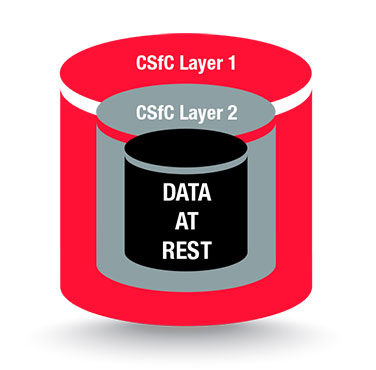
National Security Agency (NSA)-approved encryption approaches provide the high level of assurance needed to protect sensitive mission data. NSA-approved encryption approaches, such as the Commercial Solutions for Classified (CSfC) program, leverage the latest commercial encryption technologies to protect Top Secret DAR.
The CSfC encryption approach enables the development and deployment of encryption solutions more quickly and cost-effectively than ever before, while still meeting the NSA’s security requirements for classified data.
Designing Secure Storage for Size- and Power-Constrained UAS
Attritable platforms operate under strict size, weight, power, and cost (SWaP-C) constraints. These limitations shape every subsystem decision. Each subsystem must be optimized to deliver mission-critical capability within a small, low-cost footprint. Storage, processing, autonomy, and security must work together without compromising endurance or capability.
Attritable systems need to be developed and deployed rapidly. They rely on subsystems that support quick updates and easy integration to keep pace with changing mission requirements.
The Future of Attritable Warfare Depends on Data Security
Attritable systems represent a shift in modern warfare, not just deploying more drones, but deploying more purpose-built, data-aware, mission-first platforms. As the DoD investment accelerates, success will rely on technologies that balance SWaP-C efficiency, data protection, and adaptability.
The rapid fielding of these platforms marks a significant evolution in defense strategy. Ensuring the security of their mission data will not only define their viability in modern and future conflicts but also ultimately determine their impact on the outcome of uncrewed warfare.
Key Takeaways
- Attritable UAS are designed to operate in high-risk environments where systems may be lost.
- Mission data collected by drones can include ISR imagery, targeting data, and flight paths.
- If captured, unprotected storage can reveal sensitive operational intelligence.
- Encrypted data-at-rest protects mission data even when platforms cannot be recovered.
FAQs About Securing Data on Attritable UAS
- What is data-at-rest encryption for unmanned aircraft systems?
Data-at-rest encryption protects information stored on a device by encoding it so it cannot be accessed without authorized cryptographic keys. For unmanned aircraft systems, this protects mission data, such as ISR imagery, navigation routes, and targeting information, in the event a platform is lost or captured. - Why is data-at-rest encryption important for attritable UAS?
Attritable unmanned aircraft systems are designed to operate in high-risk environments where some platforms may be lost or captured. While the aircraft itself may be expendable, the mission data it carries is not. Many drones collect sensitive information such as:
a. ISR sensor imagery
b. targeting and mission planning data
c. geolocation and flight paths
d. communications metadata
If a drone is captured without encrypted storage, adversaries may be able to extract this data and gain insight into military operations, tactics, and capabilities. Data-at-rest encryption protects this information by ensuring that even if a system is captured, the stored data cannot be accessed or exploited without the proper cryptographic keys. - What happens if an adversary captures an unmanned aircraft system?
When a drone is captured, adversaries may attempt to extract both hardware and digital intelligence. In addition to studying the aircraft itself, they may analyze onboard storage to recover mission data or system information. Potential risks include:
a. exposure of ISR intelligence
b. discovery of communications protocols
c. insight into mission planning and tactics
d. reverse engineering of system capabilities
Encrypted data-at-rest storage helps ensure that even if the physical system is recovered, the mission data remains protected. - How can encrypted storage be implemented on size- and power-constrained UAS?
Many attritable platforms operate with strict limits on size, weight, and power, which can make security design challenging. To address this, secure storage solutions are typically designed to provide:
a. hardware-based encryption for high performance
b. efficient power consumption
c. compact form factors suitable for embedded platforms
d. compatibility with approved security architectures
These capabilities allow engineers to integrate strong data protection without significantly impacting platform performance or mission endurance. - Why is secure storage becoming more important for autonomous military systems?
Modern autonomous systems are collecting and processing larger volumes of mission data at the edge than ever before. As a result, the intelligence value of captured systems is increasing. At the same time, military strategies are shifting toward large numbers of attritable autonomous platforms operating in contested environments. Because systems may be lost during operations, protecting the data stored on board is essential. Secure storage and encryption ensure that sensitive mission intelligence remains protected even when hardware cannot be recovered.
i DOD Replicator Initiative: Background and Issues for Congress | Congress.gov | Library of Congress
ii Library of Congress Defense Primer: Categories of Uncrewed Aircraft Systems

Subscribe Today!
Subscribe to our blog and receive a monthly email that keeps you up-to-date with the latest news and insights from Curtiss-Wright.

Steven Petric
Senior Product Manager
The Product Manager for our data storage solutions, Steven, is a data-driven professional with over 20 years of experience bringing new offerings to market and improving existing offerings. He has a Masters in Business along with Pragmatic Marketing Certification and is a Project Management Professional (PMP).

Taylor George
Product Marketing Specialist
Taylor has more than nine years of experience in the defense and aerospace industry. A native of Dayton, Ohio, the birthplace of aviation, she holds a bachelor's degree in marketing from Wright State University and specializes in secure data storage solutions.