The U.S. Army's Next Generation Command and Control (NGC2) initiative represents a fundamental shift in how military forces connect, communicate, and make decisions across the battlefield. Designed to create a data-centric, software-defined command-and-control architecture, NGC2 aims to connect sensors, networks, platforms, applications, and warfighters into a unified operational environment.
Achieving that vision, however, presents a significant challenge: no single company can provide all the technologies required to support NGC2.
The Army has consistently emphasized that NGC2 will be built on open architectures, modular systems, rapid software integration, resilient networking, and continuous technology evolution. Success depends on an ecosystem of interoperable technologies rather than a closed, proprietary solution.
This is where partnerships become essential.
The Challenge: NGC2 Is Too Complex for a Single Vendor
NGC2 must connect a diverse set of technologies that often originate from different manufacturers, including:
- Tactical and enterprise networks
- Satellite communications systems
- Radio communications
- Edge compute infrastructure
- Artificial intelligence (AI) and analytics platforms
- Cloud services
- Cybersecurity tools
- Data management and storage solutions
- Command-and-control applications
Without strong industry collaboration, organizations risk creating disconnected systems that limit interoperability, slow innovation, and increase integration complexity.
The Army cannot afford isolated technology silos. Commanders need information to move seamlessly across networks, platforms, and domains, regardless of where data originates.
Partnerships solve this challenge by bringing together best-of-breed technologies into a unified architecture.
The Challenge: Integrating Commercial Innovation into Military Operations
Technology is evolving faster than traditional defense acquisition cycles.
Commercial advancements in networking, AI, cloud computing, storage, and cybersecurity often occur years ahead of military fielding schedules. NGC2 requires a framework that allows these innovations to be rapidly integrated without requiring complete system redesigns.
Strong technology partnerships help bridge this gap by:
- Accelerating technology insertion
- Reducing integration risk
- Enabling continuous modernization
- Preserving interoperability
- Supporting Modular Open Systems Approach (MOSA) objectives
Rather than locking the Army into a single technology roadmap, partnerships create flexibility for future growth.
The Challenge: Connecting the Tactical Edge
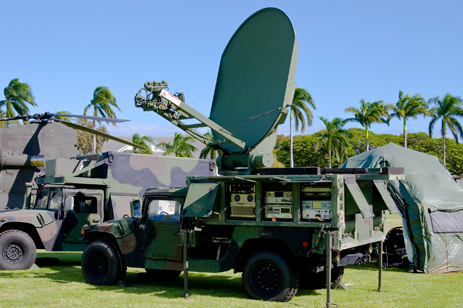
One of the most difficult NGC2 requirements is maintaining command and control in contested, disconnected, intermittent, and limited (DIL) environments.
Forward-deployed units must continue operating even when cloud connectivity is unavailable or communications are degraded.
Meeting this challenge requires multiple technology disciplines working together, including:
- Networking
- Compute
- Storage
- Radio communications
- SATCOM
- Cybersecurity
- Data management
No individual technology can solve the problem alone.
Partnerships enable these capabilities to function as a cohesive system, ensuring data can be collected, processed, secured, transported, and acted upon at the tactical edge.
The Challenge: Bridging Legacy Systems and Future Technologies
The Army's operational environment includes a mix of existing systems and emerging capabilities.
NGC2 must integrate:
- Legacy tactical radios
- Modern MANET networks
- SATCOM systems
- Cloud services
- AI-enabled applications
- Joint and coalition systems
Replacing every existing system is neither practical nor affordable.
Industry partnerships help preserve investments in existing infrastructure while enabling the adoption of next-generation technologies. This reduces operational disruption and accelerates modernization efforts.
The Challenge: Achieving Cybersecurity and Operational Trust
NGC2 systems must do more than deliver capability. They must also meet strict security requirements, obtain Authority to Operate (ATO), and securely connect to Army, joint, and allied networks.
Security cannot be treated as an afterthought.
Partnerships between networking providers, cybersecurity specialists, infrastructure vendors, and system integrators help ensure security is built into the architecture from the start.
This collaborative approach reduces certification timelines, lowers risk, and improves mission readiness.
Why Curtiss-Wright's Ecosystem Approach Aligns with NGC2
Curtiss-Wright recognizes that NGC2 will be delivered through collaboration rather than proprietary lock-in.
For decades, Curtiss-Wright has worked across the defense ecosystem to integrate technologies from leading industry partners into mission-ready solutions that support Army, joint, and allied operations.
The PacStar ecosystem is built around this philosophy. The PacStar product family is backed by an AS9100-certified quality management system, helping ensure that solutions supporting NGC2 are developed, manufactured, and sustained to the high standards expected for mission-critical defense applications.
By combining proven technologies from industry-leading partners with Curtiss-Wright's expertise in ruggedized networking, edge computing, storage, tactical communications, and systems integration, organizations can deploy solutions that are:
- Open and interoperable
- MOSA-aligned
- Rapidly adaptable
- Cybersecure
- Field-proven
- Ready for continuous modernization
Networking Partnerships
Reliable command and control starts with a resilient network.
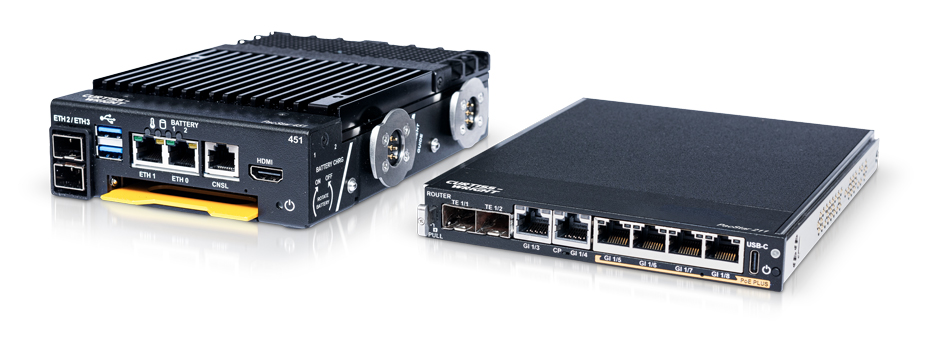
Curtiss-Wright integrates proven Cisco technologies into the PacStar products, extending enterprise-class networking capabilities to the tactical edge. This enables organizations to leverage familiar technologies while supporting the unique requirements of contested military environments.

Did You Know?
PacStar 200 and 400-Series modules, with embedded Cisco routing and switching hardware are foundation building blocks for command and control at the edge? Learn more.
Compute Partnerships
As AI and data-driven decision-making become increasingly important to NGC2, edge processing power becomes critical.
Curtiss-Wright partners with technology leaders such as NVIDIA and Intel to deliver high-performance edge computing that supports advanced analytics, AI workloads, sensor processing, and mission applications in austere environments.
Did You Know?
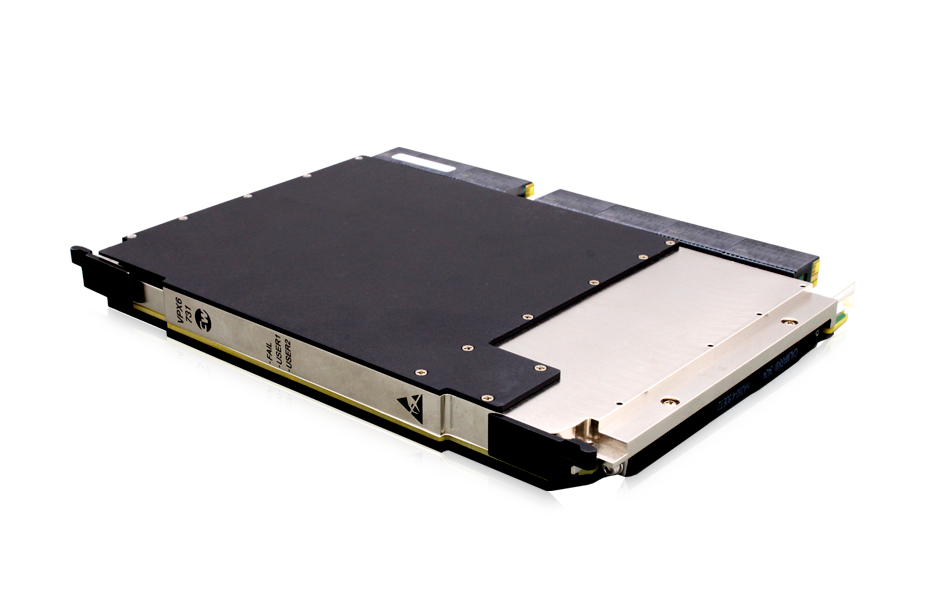
PacStar 431 AI server, powered by NVIDIA® IGX Thor™ is packaged for deployment at the tactical edge and optimized for demanding real-time edge compute, AI workloads, and next-generation command and control. It brings real-time sensor fusion, data inferencing and decision-making to autonomous machines and operators.
Storage Partnerships
Disconnected operations require local access to mission data.
PacStar storage solutions provide high-capacity, high-performance storage that allows organizations to retain, process, and analyze critical information even when cloud access is unavailable.
Radio and Communications Integration
NGC2 requires seamless communication across legacy and modern networks. By integrating with partner technologies from companies including Haivision, REDCOM, and Persistent Systems, PacStar products enable users to maintain uninterrupted C2 awareness and eliminate the vulnerability of siloed communication on the battlefield.
PacStar Modular Radio Center enables integration between traditional tactical radios, MANET systems, IP networks, and wide-area communications systems, helping bridge the gap between current and future operational architectures.
Security Partnerships
Mission success depends on trusted and secure communications.
Through FIPS-certified technologies, NSA-approved Commercial Solutions for Classified, and trusted industry partnerships with companies like 4K Solutions, ID SECURE, and Cigent, Curtiss-Wright helps organizations deploy secure architectures that meet demanding military cybersecurity requirements.
The Value of Partnering with Curtiss-Wright for NGC2
The Army has made it clear that NGC2 will be an ecosystem effort built on collaboration, interoperability, and continuous innovation.
Curtiss-Wright brings the experience, technology partnerships, and integration expertise necessary to help organizations navigate this complex environment.
Organizations working with Curtiss-Wright benefit from:
- Decades of defense integration experience
- Proven MOSA-based architectures
- Open ecosystem solutions that avoid vendor lock-in
- Trusted partnerships with leading technology providers
- Rugged, field-proven hardware platforms
- AS9100-certified quality management process
- Secure, mission-ready networking and communications
- Accelerated technology insertion and modernization
- Reduced integration and operational risk
As NGC2 continues to evolve, success will depend on the ability to bring together the right technologies, partners, and expertise. Curtiss-Wright's ecosystem approach helps ensure organizations can rapidly adapt to emerging requirements while maintaining the interoperability, security, and resilience modern military operations demand.
Learn more about Curtiss-Wright’s efforts to support the NGC2 initiative here.
Summary
NGC2 is not a single product or platform—it is an evolving ecosystem designed to connect data, networks, applications, and warfighters across multidomain operations. The complexity of that mission makes partnerships essential.
Industry collaboration helps solve critical NGC2 challenges, including interoperability, rapid technology integration, edge computing, communications resilience, cybersecurity, and modernization of legacy systems. By combining best-of-breed technologies through an open, MOSA-aligned architecture, organizations can deploy capabilities faster while reducing risk.
Curtiss-Wright's ecosystem approach, built on decades of defense integration experience and partnerships with leading technology providers, enables organizations to build secure, interoperable, and future-ready NGC2 solutions that support mission success today and adapt to tomorrow's requirements.
Frequently Asked Questions
- Why are partnerships important for NGC2?
NGC2 requires networking, computing, storage, cybersecurity, communications, cloud, and software technologies that no single vendor can provide alone. Partnerships enable these technologies to work together within an interoperable ecosystem. - How do partnerships support open architecture in NGC2?
Partnerships allow organizations to integrate best-of-breed technologies from multiple vendors rather than relying on proprietary systems. This improves interoperability, flexibility, and long-term modernization. - What problems do partnerships solve for Army command and control?
Partnerships help solve interoperability challenges, accelerate technology integration, reduce vendor lock-in, improve cybersecurity, connect legacy and modern systems, and support continuous modernization. - How does MOSA support NGC2?
A Modular Open Systems Approach (MOSA) enables organizations to integrate new technologies more quickly, replace components without redesigning entire systems, and maintain interoperability across the force. - How does Curtiss-Wright support the NGC2 ecosystem?
Curtiss-Wright provides rugged networking, edge computing, storage, communications, cybersecurity, and integration solutions designed to support open architectures and connect technologies from multiple industry partners. - What are the benefits of working with Curtiss-Wright for NGC2?
Benefits include reduced integration risk, open architecture flexibility, trusted technology partnerships, field-proven hardware, secure communications, accelerated modernization, and decades of experience supporting mission-critical defense systems.

Subscribe Today!
Subscribe to our blog and receive a monthly email that keeps you up-to-date with the latest news and insights from Curtiss-Wright.

Jeff Nelson
Director of Business Development Networking, Communications and Space Systems
Jeff Nelson is a seasoned executive with more than three decades of leadership experience across defense, national security, and advanced communications technologies. He currently serves as a Director of Business Development at Curtiss-Wright Defense Solutions, where he leads growth initiatives focused on networking and communications.
Curtiss-Wright acquired Pacific Star Communications (PacStar) in 2020. Jeff spent over a decade at PacStar, where he played a central role in driving business development and expanding the company’s footprint in tactical networking and expeditionary communications. Prior to joining PacStar, Jeff served as a Satellite Communications and Network Security Analyst supporting the Defense Information Systems Agency (DISA) and the Headquarters Department of the Army CIO/G6. Jeff also served the private sector with roles in telecommunications and enterprise solutions with L-3 Communications and Lucent Technologies, where he developed and managed large-scale national accounts and supported early Voice over IP (VoIP) and call center technologies.
His military experience includes 20 years with the Marine Corps, Active and Reserves, where he retired as a Lieutenant Colonel. His assignments spanned operational and strategic roles, including Networks Branch Chief at Headquarters Marine Corps, and multiple deployments as a Communications & Information Systems Officer.
He holds a Master of Science in Space Systems Operations from the Naval Postgraduate School and a Bachelor of Arts in Accounting and Business Management from Point Loma Nazarene University.